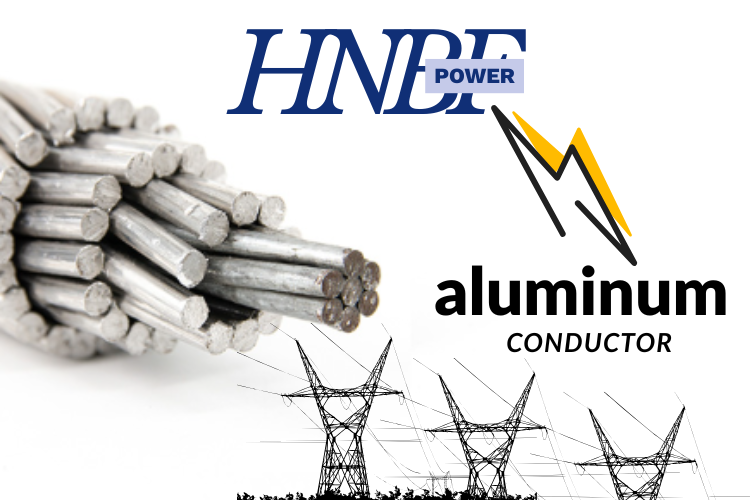
In today’s expanding power transmission and distribution networks, the aluminum conductor has become the backbone of reliable, cost-effective, and high-capacity overhead line construction. From urban distribution feeders to long-distance transmission corridors, aluminum-based conductors offer the mechanical strength, electrical performance, and lifecycle value that utilities and EPC contractors demand.
As a global manufacturer of overhead conductors and power cables, HNBF Power delivers engineered aluminum conductor solutions for utility companies, project developers, and industrial grid operators worldwide.
This guide explains how aluminum conductors work, their technical advantages, and how engineers and procurement teams can select the right configuration for modern power networks.
Why Aluminum Conductor Is the Preferred Choice for Overhead Lines
An aluminum conductor is designed to transmit electrical energy efficiently while maintaining low structural load on towers and poles. Compared with traditional copper conductors, aluminum offers:
-
Lower weight per kilometer
-
Competitive electrical conductivity
-
Lower material and installation cost
-
Better suitability for long-span and high-voltage overhead lines
These advantages make aluminum conductor systems the industry standard for both distribution lines and high-voltage transmission projects.
For utilities seeking optimized grid expansion, aluminum conductors support higher current capacity without significantly increasing mechanical stress on existing structures.
Common Types of Aluminum Conductor Used in Power Networks
AAC – All Aluminum Conductor
AAC is widely applied in short- to medium-span distribution lines and urban networks. It provides excellent conductivity and corrosion resistance, making it ideal for coastal and industrial environments where atmospheric exposure is a concern.
AAAC – All Aluminum Alloy Conductor
AAAC uses aluminum alloy instead of pure aluminum. This structure improves tensile strength while maintaining low weight. It is commonly selected for longer spans and areas where higher mechanical loading is expected.
ACSR – Aluminum Conductor Steel Reinforced
ACSR combines aluminum strands with a steel core. The aluminum layers carry electrical current, while the steel core delivers high mechanical strength. This configuration is widely used in long-distance transmission lines and heavy-load applications.
All three types play a critical role in modern overhead power systems, and HNBF Power manufactures AAC, AAAC, and ACSR according to international utility standards.
Key Technical Advantages of Aluminum Conductor Systems
High Strength-to-Weight Ratio
One of the most important engineering benefits of aluminum conductor design is the superior strength-to-weight ratio. Lighter conductors reduce tower loads, foundation requirements, and installation complexity especially important in mountainous or remote project sites.
Optimized Electrical Performance
Although aluminum has lower conductivity than copper per cross-sectional area, its low density allows larger conductor diameters at similar weight. This improves heat dissipation and supports higher current ratings under controlled operating temperatures.
Excellent Corrosion Resistance
Modern aluminum conductor materials and surface treatments provide strong resistance against environmental degradation, ensuring long service life in coastal, industrial, and polluted regions.
Cost Efficiency Across the Project Lifecycle
From material procurement to transportation, installation, and long-term maintenance, aluminum conductors deliver significant total cost advantages for power utilities and EPC contractors.
How to Select the Right Aluminum Conductor for Your Project
Define Electrical Loading and System Voltage
Engineers should first determine the expected ampacity, operating temperature, and voltage class. This defines the required conductor cross-section and construction type.
Evaluate Mechanical and Environmental Conditions
Span length, wind loading, ice accretion, and terrain profile directly affect the choice between AAC, AAAC, or ACSR. Long spans and heavy mechanical stress often require reinforced structures such as ACSR or high-strength alloy conductors.
Compliance with Utility and International Standards
Transmission projects must comply with regional and international specifications related to stranding, tensile strength, resistance, and testing procedures. HNBF Power supports customized aluminum conductor manufacturing based on utility technical specifications and tender requirements.
Aluminum Conductor Applications in Modern Power Infrastructure
Aluminum conductor systems are widely used across:
-
Medium and high-voltage overhead transmission lines
-
Urban and rural distribution networks
-
Renewable energy grid interconnections
-
Industrial and mining power supply lines
-
Infrastructure expansion and grid rehabilitation projects
For utilities upgrading aging networks, replacing legacy conductors with modern aluminum conductor designs can significantly improve line performance and reliability.
Why Utilities and EPC Contractors Choose HNBF Power
HNBF Power is a professional global supplier of overhead conductors and power cables, including aluminum conductor, AAC, AAAC, ACSR, ABC cables, LV power cables, and concentric cables.
By combining advanced production lines, strict quality control, and utility-grade testing systems, HNBF Power delivers:
-
Stable and traceable raw material sourcing
-
Consistent stranding and compacting accuracy
-
Custom conductor designs for specific spans and loading conditions
-
Technical documentation support for engineering and procurement teams
For grid expansion projects, tender-based procurement, and long-term utility supply frameworks, HNBF Power provides dependable aluminum conductor solutions tailored to real-world operating conditions.
FAQs About Aluminum Conductor
1. What is the main advantage of aluminum conductor over copper?
The main advantage is its lower weight combined with competitive electrical performance. This reduces tower loading, transportation cost, and installation complexity in overhead line projects.
2. Is aluminum conductor suitable for long-distance transmission lines?
Yes. ACSR and high-strength aluminum alloy conductors are widely used in long-span and high-voltage transmission networks.
3. Which aluminum conductor type is best for coastal environments?
AAC and AAAC are commonly selected for coastal or high-corrosion regions due to their excellent resistance to atmospheric exposure.
4. Can aluminum conductors be customized for specific utility standards?
Yes. Conductor construction, stranding pattern, cross-section, and testing requirements can be fully customized according to project specifications and utility standards.
Power Your Next Grid Project with HNBF Power
Selecting the right aluminum conductor is critical to ensuring electrical reliability, mechanical safety, and long-term network performance. Whether you are developing a new transmission corridor, upgrading distribution infrastructure, or expanding renewable energy connections, HNBF Power delivers engineered aluminum conductor solutions designed for utility-grade performance.
Contact HNBF Power today to discuss your project requirements and receive customized aluminum conductor solutions tailored to your grid, environment, and operational standards.




 Arabic
 French
 Spanish
 Portuguese
 Deutsch
 Turkish
 Dutch
Dutch
 Italiano
 Russian
 Romaian
 Portuguese (Brazil)
 Greek
Greek
