


How to Verify a Diamond Is Genuinely Certified Before You Pay
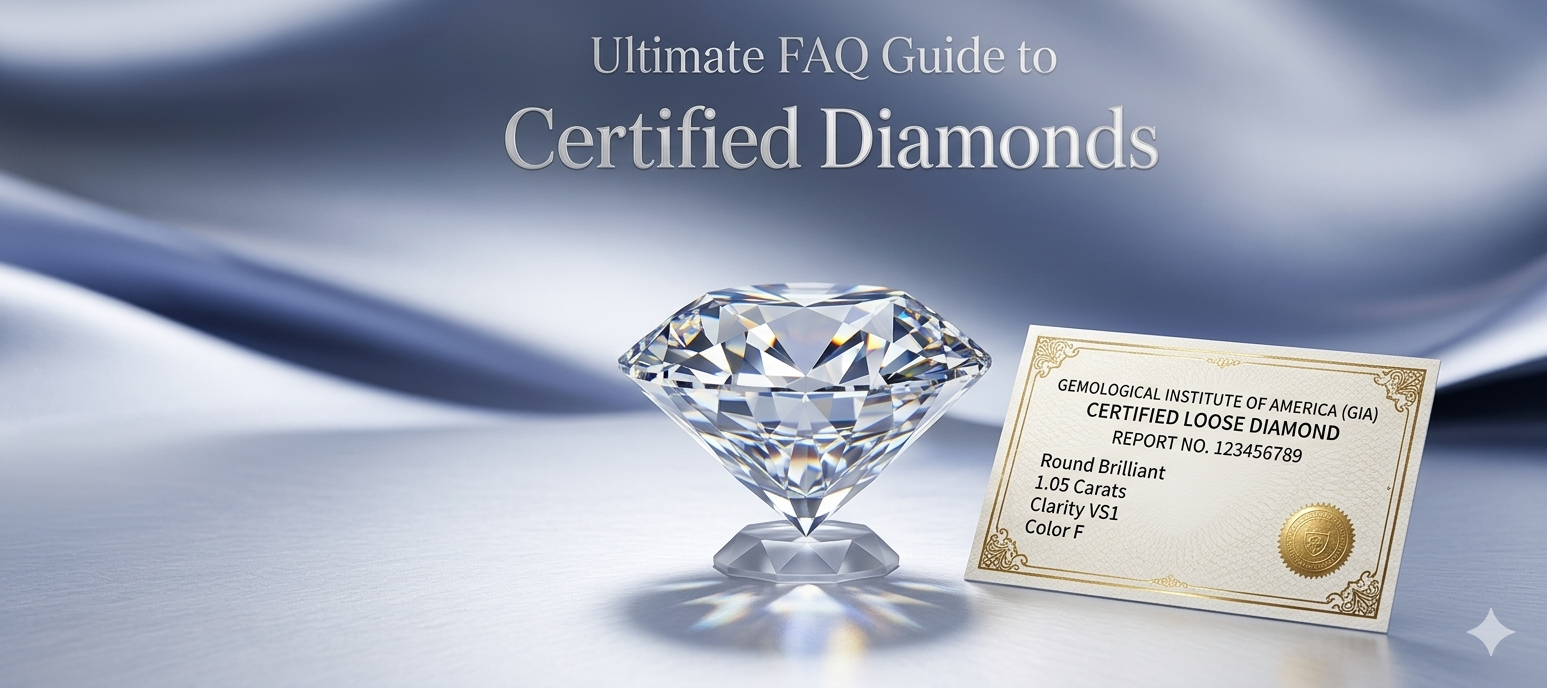
A diamond certificate is supposed to remove doubt. It tells a buyer exactly what they are paying for: the carat weight, the cut quality, the color grade, the clarity, and whether the stone is natural or laboratory-grown. The problem is that a certificate is only as trustworthy as the lab that issued it and the verification a buyer is willing to do. A printed report on a sales counter proves very little on its own.
This matters most in moments when people are least likely to scrutinize the paperwork. Engagement shopping, anniversary purchases, and holiday buying on trips to jewelry destinations like Aruba all carry an emotional weight that works against careful checking. The verification steps below are quick, and most can be done before any money changes hands.
What a Diamond Certificate Actually Is
A diamond certificate, more accurately called a grading report, is an independent assessment of a stone's characteristics by a gemological laboratory. It is not an appraisal and it is not a statement of price. It documents the 4Cs (cut, color, clarity, and carat weight) along with measurements, proportions, fluorescence, and any treatments the stone has undergone.
The distinction between a grading report and an appraisal trips up a lot of buyers. An appraisal assigns a monetary value, usually for insurance, and the figure can be inflated. A grading report describes the stone's physical and optical properties and assigns no value at all. When verifying a purchase, the grading report is the document that matters.
Not all labs grade to the same standard. The most widely respected include the GIA (Gemological Institute of America), AGS (American Gem Society), and to varying degrees IGI and GCAL. Labs differ in how strictly they apply grades, so the same stone can receive a more generous color or clarity grade from a looser lab. A report from an unfamiliar or in-house laboratory deserves more skepticism, not less.
Confirm the Lab and Match the Report Number
Every legitimate report carries a unique number. The first verification step is to confirm that number against the issuing lab's own database, not against any paperwork the seller provides.
- GIA: Use the GIA Report Check tool on the official GIA website and enter the report number.
- IGI: Use the IGI report verification page.
- AGS and GCAL: Both maintain online lookup systems tied to the report number.
When the number returns a match, compare every figure on the screen to the printed report and to the stone itself. Carat weight, measurements, color, clarity, and cut grade should all line up. A genuine report that has been altered will show discrepancies between the seller's printout and the lab's live record. If the lab's database has no record of the number, treat that as a stop sign.
Match the Report to the Actual Stone
A verified report still proves nothing if it describes a different diamond. Reports and stones get separated, swapped, or paired carelessly, sometimes without any intent to deceive.
Two checks close this gap. First, the measurements. The report lists the diamond's dimensions in millimeters, and a jeweler can measure the stone in front of you. They should match within a fraction of a millimeter. Second, the laser inscription. Most modern reports note an inscription on the diamond's girdle (the thin edge around the stone) containing the report number, readable under magnification. Ask to see it. The number on the girdle must match the number on the report and the number in the lab's database.
Inscription placement and visibility vary by shape. A round brilliant offers a continuous girdle that makes inscriptions easy to locate, while fancy shapes can be slightly different to read along the edge. The check still applies whether you are looking at a round stone, a princess cut diamond with its sharp square corners, a cushion diamond with softened edges, a pear shape diamond, or a heart shaped diamond. The shape changes where you look, not whether you should look.
Read the Report Critically, Not Just for the Grades
Buyers tend to fixate on color and clarity letters and ignore the rest of the document. The sections people skip are often where value and problems hide.
- Cut grade: On round diamonds, cut is graded from Excellent down to Poor and has more influence on visible brilliance than a one-step change in color or clarity. Fancy shapes like princess, cushion, pear, and heart are not assigned an overall cut grade by GIA, so polish and symmetry ratings carry more weight for those stones.
- Fluorescence: Strong fluorescence can occasionally make a stone look hazy in sunlight. It is not automatically a flaw, but it should be a known factor, not a surprise.
- Treatments and origin: The report should state whether a diamond is natural or laboratory-grown and disclose any clarity enhancement or HPHT treatment. This single line can represent a large difference in price.
- Comments section: Notes about clarity characteristics, extra facets, or graining live here. They explain why two stones with identical grades can look and cost differently.
Natural Versus Lab-Grown: A Verification Point, Not an Afterthought
Laboratory-grown diamonds are chemically and optically identical to mined diamonds, and they are graded on the same scale. The difference is origin, and the price gap is significant. Reputable labs issue separate reports for lab-grown stones and state the growth method on the document.
The verification concern is straightforward: a lab-grown stone should never be sold or certified as natural. The grading report should make the distinction explicit, and the lab's online record should confirm it. If a seller is vague about origin or the report language is ambiguous, that ambiguity is the answer.
Red Flags That Should Pause a Purchase
A few signals warrant stepping back before payment.
- The seller offers only an in-house or appraisal document and no independent grading report.
- The report number does not appear in the issuing lab's database.
- The seller resists or cannot show the laser inscription under magnification.
- Measurements on the report do not match the stone.
- The grading lab is unfamiliar and has no public verification system.
- Pricing seems far below comparable certified stones, which often signals a grade from a lenient lab or an undisclosed treatment.
None of these alone proves fraud, but each is a reason to slow down and verify rather than trust.
Why This Matters More When Buying Abroad
Destination jewelry shopping adds pressure that domestic buying usually does not. Buyers are on a schedule, returns may be impractical once they fly home, and the emotional context of a trip discourages hard questions. Established jewelers in tourist markets, including names like Noble Jewelers Aruba, typically supply recognized grading reports precisely because informed buyers now expect them. The buyer's responsibility is the same anywhere: verify the report against the lab's own records and confirm the stone matches before paying.
The advantage of certification verification is that it travels. A GIA or IGI number can be checked from a phone in any country, which means a buyer in Oranjestad has the same verification power as one at home. The tools do not care where the counter is.
FAQ
Can a diamond certificate be faked? Yes. A printed report can be altered or fabricated, which is why the report number must always be checked against the issuing lab's online database rather than trusted on paper alone. A genuine certificate will match the lab's live record exactly.
Is a GIA report better than other labs? GIA is widely regarded as one of the strictest and most consistent grading labs, which makes its grades a reliable benchmark. Other labs may grade the same stone more generously, so a report from a lenient lab can make a diamond appear better than a stricter lab would rate it. The lab matters as much as the grades.
What is a laser inscription and why does it matter? A laser inscription is a microscopic marking on the diamond's girdle, usually the report number, readable under magnification. It links a specific stone to a specific report, which lets a buyer confirm the certificate and the diamond actually belong together rather than being a mismatched pair.
Does the diamond's shape affect how I verify it? The verification process is the same for every shape. Whether the stone is a princess, cushion, pear, or heart shape, the steps are identical: confirm the report number online, match the measurements, and locate the inscription. Only the inscription's position along the girdle changes with the shape.
Is a lab-grown diamond certificate legitimate? Yes. Reputable labs grade laboratory-grown diamonds on the same scale as natural stones and issue valid reports for them. The report should clearly state that the diamond is lab-grown and identify the growth method, and that origin should never be misrepresented as natural.
What is the difference between a certificate and an appraisal? A grading report describes a diamond's physical characteristics and assigns no monetary value. An appraisal assigns a price, usually for insurance, and that figure can be inflated. For verifying what you are buying, the independent grading report is the document that matters.

 English
 Arabic
 French
 Spanish
 Portuguese
 Deutsch
 Turkish
 Italiano
 Russian
 Romaian
 Portuguese (Brazil)
 Greek
Greek
