


Nante Industrial Plug Performance Engineered For Continuous Duty
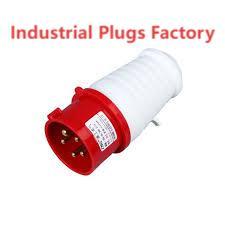
Specifiers and maintenance teams often weigh trade-offs between durability, sealing, and serviceability when selecting a Industrial Plug , and an informed choice early in the project lifecycle prevents costly rework. Field crews also value how a Industrial Plug simplifies replacement cycles and spare-parts logistics, so this article explains design fundamentals, installation best practices, environmental selection, maintenance regimes, and retrofit strategies to help engineers and operations managers make robust choices.
Mechanical Design: housings, mating systems, and impact resistance
A connector’s housing is its first line of defense. Materials range from glass-filled nylon for lightweight installations to die-cast aluminum or stainless steel for heavy-duty or corrosive sites. Look for reinforced bezels and recessed mating faces that reduce the chance of direct impact to contacts. Locking mechanisms — bayonet, threaded collars, or positive-latch systems — provide both tactile confirmation of a secure connection and resistance to vibration-induced loosening. In environments with frequent mechanical abuse, prioritize IK-rated faces and replaceable shrouds that protect the connector without needing full replacement.
Electrical performance: contacts, plating, and thermal behavior
Contacts determine a connector’s electrical reliability. Copper-alloy contacts with appropriate silver or nickel plating offer low resistance and long wear life, while multi-finger or split-contact geometries increase contact area and reduce localized heating. Pay attention to mating cycles and spring-back characteristics to ensure contact pressure remains sufficient over time. Consider derating curves that account for ambient temperature and enclosure thermal resistance; a connector rated at a certain ampacity in a laboratory may behave differently when mounted on a hot, enclosed surface. Integration with upstream protective devices — breakers, fuses, and motor protection — is vital to maintain coordination under fault conditions.
Environmental sealing and ingress protection
Ingress protection depends on both gasket design and how the connector is mounted. O-ring seals, molded gaskets, and tongue-and-groove door profiles each have trade-offs in compressive durability and ease of maintenance. Pressure-equalizing vents can prevent seal extrusion across altitude or temperature swings, but they must be designed to avoid liquid ingress during washdowns. For washdown or outdoor installations, target IP66 or IP67 as a baseline and verify that accessory hoods, gland plates, and cable glands are also rated — accessories often become the weak link that reduces overall protection.
Nante Accessories and installation ergonomics
Using manufacturer-specified accessory kits simplifies field integration. Matched gland plates, dust caps, splash hoods, and locking collars preserve declared ratings while adapting the connector to poles, panels, or portable frames. Thoughtful installation aids reduce human error: captive fasteners, color-coded terminals, and torque-limited hardware speed work and reduce the chance of under- or over-tightening. Where possible, use pre-wired harnesses and dry-fit checks on the bench to validate fit and routing before final installation — this practice shortens site time and reduces the likelihood of wiring mistakes.
Commissioning, diagnostics, and preventive maintenance
A commissioning checklist should include insulation resistance, phase sequence, and clamp torque verification. Record baseline thermal images and current measurements to compare with later surveys. Periodic thermal scanning during scheduled outages reveals marginal terminations before they become failures; similarly, visual inspection will catch early gasket compression loss or corrosion on exposed hardware. Replace consumables (O-rings, dust caps, sacrificial contacts) on a preventive schedule and keep a prioritized spare-parts list to reduce mean time to repair.
Retrofit strategies and lifecycle thinking
When replacing legacy connections, prioritize compatibility with existing conduit and harnesses where safe; adapter plates and retrofit frames let teams reuse routing while upgrading the connector family. However, never rely on a new connector to compensate for degraded upstream protection or poor grounding — perform a full system review. Consider modular connector families where contact inserts and sealing modules are replaceable, allowing partial repairs instead of full-unit swaps, which lowers lifecycle cost and shortens downtime.
Safety, standards, and documentation
Verify compliance with applicable standards (IEC, UL, regional equivalents) and insist on third-party test reports for dielectric strength, short-circuit withstand, and environmental ratings when project specifications require them. Include clear labeling and wiring diagrams inside junction covers and maintain an as-built dossier that lists torque values, part numbers, and spare-part references. Good documentation accelerates future maintenance and reduces risk during emergency interventions.
Practical tips from field technicians
Seasoned installers recommend dry-fitting harnesses, pre-labeling conductors, and using captive hardware to avoid lost screws. Apply corrosion inhibitors on exposed threads in coastal environments and replace dust caps immediately after demating to minimize moisture ingress. Train technicians to follow manufacturer mating sequences and to avoid forcing connections — misaligned mating can damage contacts and compromise long-term reliability.
Conclusion: balance robustness, serviceability, and system fit
Selecting industrial connection systems is a systems exercise: balance contact metallurgy and housing materials with protection ratings, integration accessories, and a maintenance plan that reflects real site conditions. Prioritize modular designs and manufacturer-supported accessory ecosystems to simplify spares management and speed field repairs. Thoughtful specification and disciplined commissioning will yield reliable, maintainable power interfaces that reduce unplanned outages and lower total cost of ownership. For product specs, installation guides, and accessory lists, visit www.nante.com

 English
 Arabic
 French
 Spanish
 Portuguese
 Deutsch
 Turkish
 Dutch
Dutch
 Italiano
 Russian
 Portuguese (Brazil)
 Greek
Greek
