


The Role of Corrosion-Resistant Valves in Modern Plants
Introduction
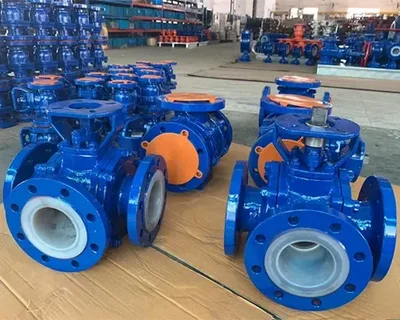
The PFA Lined Valves Market is a specialized segment of the industrial valves industry, serving critical applications that require superior corrosion resistance, chemical inertness, and high purity flow control. PFA (Perfluoroalkoxy) lined valves are designed with a fluoropolymer lining that protects the valve body from aggressive chemicals, high temperatures, and abrasive media. These valves are widely used in chemical processing, pharmaceuticals, petrochemicals, water and wastewater treatment, semiconductor manufacturing, food and beverage, and specialty industrial applications. As process industries increasingly handle highly corrosive and hazardous fluids, PFA lined valves have become essential components for ensuring operational safety, product purity, and long-term system reliability.
Market Drivers
One of the primary drivers of the PFA Lined Valves Market is the rapid growth of the chemical and specialty chemicals industry. Chemical processing plants frequently handle acids, alkalis, solvents, and corrosive compounds that can degrade conventional metal valves. PFA lining provides excellent resistance to a broad range of chemicals, significantly extending valve life and reducing maintenance requirements. Stricter safety regulations and environmental standards are also driving demand, as leak prevention and reliable flow isolation are critical to minimizing accidents, emissions, and contamination.
Another key driver is the expansion of the pharmaceutical and semiconductor industries. These sectors require ultra-pure processing environments where contamination from metal corrosion or material leaching must be avoided. PFA lined valves offer non-reactive and smooth internal surfaces that support high purity requirements and clean-in-place operations. Growth in wastewater treatment and industrial effluent management is also supporting market expansion, as treatment plants increasingly deal with chemically aggressive waste streams. Additionally, rising focus on plant uptime and lifecycle cost optimization is encouraging end users to invest in durable, corrosion-resistant valve solutions despite higher initial costs.
Market Challenges
Despite strong demand, the PFA Lined Valves Market faces several challenges. High upfront cost compared to conventional metal or rubber-lined valves can limit adoption, particularly among cost-sensitive end users and small-scale industrial operators. Manufacturing PFA lined valves requires specialized processes to ensure uniform lining thickness, strong adhesion, and defect-free surfaces, increasing production complexity and cost. Any damage to the lining during installation or operation can compromise valve performance, requiring careful handling and trained personnel.
Another challenge is pressure and temperature limitation compared to some high-alloy metal valves. While PFA offers excellent chemical resistance, it has mechanical constraints that may restrict use in extremely high-pressure or high-temperature applications. Longer lead times and limited availability of customized valve designs can also affect project schedules. Additionally, competition from alternative corrosion-resistant solutions such as PTFE-lined valves, high-performance plastics, and exotic alloys creates pricing and differentiation pressure. Ensuring consistent quality and certification across global markets further adds to compliance complexity.
Market Opportunities
The PFA Lined Valves Market presents significant opportunities driven by industrial modernization and sustainability trends. Increasing investment in chemical processing capacity, particularly in emerging economies, is creating new demand for corrosion-resistant flow control solutions. Upgrades and retrofits of aging industrial plants offer opportunities to replace legacy valves with PFA lined alternatives that improve safety and reduce maintenance downtime. Custom-engineered valve solutions for specific chemical processes provide differentiation opportunities for manufacturers.
Technological advancements in lining techniques and valve design are expanding performance capabilities, enabling improved pressure ratings, longer service life, and enhanced reliability. Growth of high-purity industries such as electronics, batteries, and advanced materials manufacturing creates strong demand for PFA lined valves with stringent contamination control standards. Sustainability initiatives also support market growth, as longer-lasting valves reduce material waste, maintenance frequency, and environmental risk. Aftermarket services, including inspection, refurbishment, and replacement linings, present recurring revenue opportunities for suppliers.
Regional Insights
Asia-Pacific holds a significant share of the PFA Lined Valves Market due to rapid expansion of chemical manufacturing, pharmaceuticals, and electronics production. Countries in this region are investing heavily in industrial infrastructure and wastewater treatment facilities, driving demand for corrosion-resistant valves. North America represents a mature market characterized by stringent safety and environmental regulations, strong presence of specialty chemical producers, and ongoing plant upgrades.
Europe plays an important role, supported by advanced chemical processing industries, high regulatory standards, and emphasis on sustainable and safe industrial operations. Demand for high-quality, certified PFA lined valves is particularly strong in this region. The Middle East shows growing potential driven by petrochemical investments and industrial diversification efforts. Latin America is experiencing gradual growth as chemical and mining industries expand, while Africa presents long-term opportunities linked to industrial development and improved environmental regulation, though adoption is influenced by cost considerations.
Future Outlook
The future outlook for the PFA Lined Valves Market is positive, supported by long-term growth in chemical processing, pharmaceuticals, and environmental management industries. Demand is expected to increase steadily as industries handle more aggressive chemicals and prioritize safety, reliability, and lifecycle performance. Innovation will focus on improving lining durability, expanding operating envelopes, and enhancing quality assurance through advanced manufacturing and inspection technologies.
Digitalization and smart valve monitoring may gradually influence the market, enabling predictive maintenance and early detection of lining damage or performance degradation. Sustainability and regulatory compliance will remain central drivers, encouraging adoption of high-performance valve solutions that reduce leakage and environmental risk. As industrial processes become more complex and safety-critical, PFA lined valves are expected to remain essential components in corrosion-intensive applications.
Conclusion
The PFA Lined Valves Market plays a critical role in enabling safe, efficient, and reliable flow control in corrosive and high-purity industrial environments. Driven by growth in chemical processing, pharmaceuticals, wastewater treatment, and specialty manufacturing, the market continues to expand globally. Although challenges related to cost, mechanical limitations, and manufacturing complexity persist, technological innovation and increasing focus on safety and lifecycle efficiency are strengthening market prospects. As industries prioritize corrosion resistance and process integrity, PFA lined valves will remain a key solution supporting modern industrial operations.

 English
 Arabic
 Spanish
 Portuguese
 Deutsch
 Turkish
 Dutch
Dutch
 Italiano
 Russian
 Romaian
 Portuguese (Brazil)
 Greek
Greek
