


Graphene Solar Cell Market Trends and Emerging Opportunities
Introduction
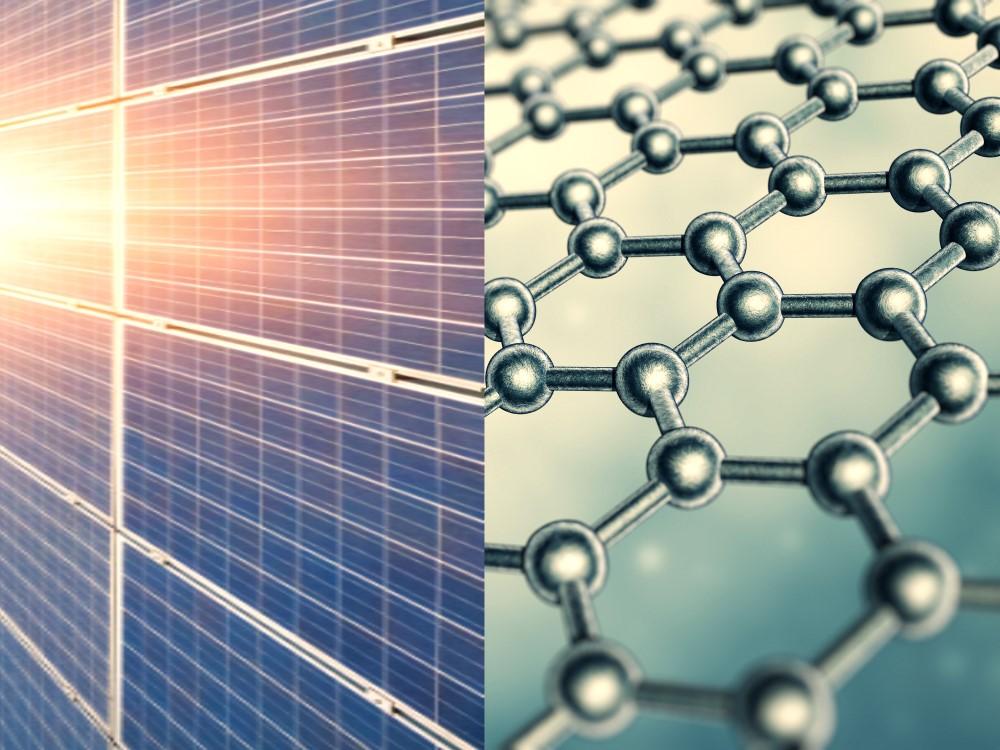
The graphene solar cell market is an emerging segment of the renewable energy and advanced materials industry, focused on the use of graphene and graphene-based materials to enhance solar cell performance. Graphene, a single layer of carbon atoms arranged in a hexagonal lattice, offers exceptional electrical conductivity, transparency, flexibility, and mechanical strength. These properties make it highly attractive for next-generation photovoltaic technologies aimed at improving efficiency, durability, and design flexibility.
Graphene solar cells are being explored across multiple photovoltaic architectures, including silicon-based solar cells, thin-film technologies, perovskite solar cells, and flexible or wearable solar applications. By improving charge transport, reducing energy losses, and enabling lightweight designs, graphene has the potential to overcome several limitations of conventional solar cells. Growing investment in clean energy innovation, along with rapid progress in nanomaterials research, is driving steady development of the global graphene solar cell market.
Market Drivers
One of the primary drivers of the graphene solar cell market is the global push toward renewable energy adoption. Governments and industries worldwide are investing heavily in solar power to reduce carbon emissions and dependence on fossil fuels. Graphene-enhanced solar cells offer the promise of higher efficiency and improved performance, making them attractive for future solar installations.
Demand for lightweight and flexible solar solutions also supports market growth. Traditional solar panels are rigid and heavy, limiting their use in certain applications. Graphene’s flexibility and strength enable the development of bendable and ultra-thin solar cells that can be integrated into building materials, vehicles, portable electronics, and wearable devices.
Technological advancement in nanomaterials and photovoltaic research is another major driver. Continuous improvements in graphene synthesis, processing techniques, and material integration are enhancing the commercial viability of graphene-based solar cells. Research breakthroughs are accelerating the transition from laboratory-scale prototypes to pilot-scale production.
Market Challenges
Despite strong potential, the graphene solar cell market faces several challenges. High production costs of high-quality graphene remain a major barrier. Scalable and cost-effective manufacturing of defect-free graphene suitable for photovoltaic applications is still under development, limiting large-scale commercialization.
Technical integration challenges also affect market growth. Incorporating graphene into existing solar cell architectures requires precise material control and compatibility with current manufacturing processes. Variability in graphene quality can impact device performance and reliability, posing challenges for consistent mass production.
Market maturity is another challenge. Graphene solar cells are still in the early stages of commercialization compared to conventional silicon solar cells. Limited real-world deployment and long-term performance data can slow adoption among risk-averse investors and utility-scale developers.
Market Opportunities
Technological innovation presents strong opportunities for the graphene solar cell market. Ongoing research is focused on improving graphene synthesis methods, reducing costs, and enhancing material performance. Development of hybrid solar cells that combine graphene with perovskite or organic materials offers promising pathways for achieving higher efficiency and stability.
Integration into next-generation applications creates significant growth potential. Graphene solar cells are well suited for applications where traditional panels are impractical, such as curved surfaces, lightweight structures, and mobile systems. Use in electric vehicles, aerospace, smart buildings, and Internet of Things devices opens new markets beyond conventional solar farms.
Sustainability and durability also represent key opportunities. Graphene can improve the lifespan and environmental resistance of solar cells by enhancing conductivity and reducing degradation. Longer-lasting solar cells with lower maintenance requirements improve overall lifecycle economics and strengthen the value proposition of graphene-based technologies.
Regional Insights
Asia-Pacific holds a leading position in the graphene solar cell market due to strong solar manufacturing capabilities and extensive investment in advanced materials research. Countries with established photovoltaic supply chains and research ecosystems are actively exploring graphene-enhanced solar technologies.
Europe represents an important market driven by strong focus on clean energy innovation and sustainability. Research institutions and renewable energy initiatives in the region are supporting development of next-generation photovoltaic solutions, including graphene-based solar cells.
North America also contributes significantly to market development, supported by advanced research infrastructure, startup activity, and investment in renewable energy technologies. Collaboration between universities, research labs, and technology companies is accelerating innovation in graphene solar cell applications.
Future Outlook
The future of the graphene solar cell market is closely linked to advancements in materials science, manufacturing scalability, and photovoltaic system integration. As production methods improve and costs decline, graphene is expected to play an increasingly important role in enhancing solar cell efficiency and versatility.
Graphene solar cells are likely to complement rather than immediately replace conventional silicon technologies. Hybrid solutions that integrate graphene into existing solar cells may see earlier commercialization. Over the long term, fully graphene-enabled or graphene-dominant solar technologies could reshape the solar industry by enabling new form factors and applications.
Long-term market growth will depend on successful transition from research to commercial deployment, supported by continued investment, policy support for renewable energy, and collaboration across the materials and energy sectors.
Conclusion
The graphene solar cell market represents a promising frontier in solar energy and advanced materials innovation. Driven by global renewable energy demand, need for lightweight and flexible solar solutions, and rapid progress in nanotechnology research, the market is gaining momentum. While challenges related to cost, scalability, and commercialization remain, opportunities in hybrid solar technologies, emerging applications, and durability enhancement are strengthening long-term prospects. As graphene technology matures, graphene solar cells have the potential to significantly enhance solar energy performance and expand the reach of photovoltaic systems across diverse industries.

 English
 Arabic
 Spanish
 Portuguese
 Deutsch
 Turkish
 Dutch
Dutch
 Italiano
 Russian
 Romaian
 Portuguese (Brazil)
 Greek
Greek
