


How Command and Control Systems Enable Real-Time Operational Visibility
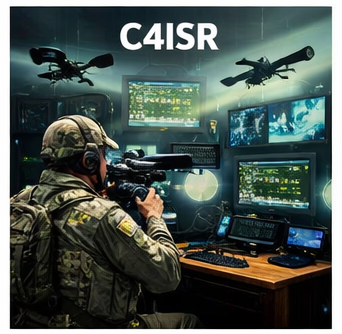
Evolving Role of C4ISR in Modern Defense Operations
C4ISR—command, control, communications, computers, intelligence, surveillance, and reconnaissance—has become a foundational pillar of modern military strategy. As defense environments grow more complex and multidomain operations become the norm, c4isr capabilities are evolving from standalone systems into fully integrated digital ecosystems. Armed forces worldwide are prioritizing faster decision cycles, enhanced situational awareness, and seamless coordination across land, air, sea, cyber, and space domains.
At the core of this transformation is the modernization of command and control systems. Traditional hierarchical command models are being replaced by network-centric architectures that enable real-time data sharing and decentralized decision-making. These systems allow commanders to access a unified operational picture, improving responsiveness in time-critical scenarios while reducing information silos that previously constrained operational effectiveness.
Key Technology Trends Shaping C4ISR Systems
One of the most significant trends influencing C4ISR systems is the integration of artificial intelligence and advanced data analytics. AI-enabled tools can process vast volumes of sensor data, identify patterns, and support predictive assessments that enhance threat detection and mission planning. This capability is particularly valuable in intelligence, surveillance, and reconnaissance functions, where speed and accuracy directly affect operational outcomes.
Cloud computing and edge processing are also redefining military C4ISR architectures. Secure defense clouds enable scalable data storage and rapid application deployment, while edge computing ensures that critical data processing can occur close to the battlefield, even in contested or low-connectivity environments. Together, these technologies strengthen system resilience and ensure continuity of operations under adverse conditions.
Interoperability remains another major focus area. Modern military C4ISR initiatives emphasize standardized interfaces and open architectures to ensure compatibility among allied forces and legacy platforms. This is especially important for coalition operations, where multiple nations must coordinate using diverse technologies while maintaining secure communications and shared situational awareness.
The expanding adoption of advanced C4ISR solutions is reflected in strong long-term market fundamentals. According to Grand View Research, the global C4ISR market size is projected to reach USD 190.78 billion by 2033, growing at a CAGR of 4.2% from 2025 to 2033. This steady growth underscores sustained defense investments in digital command infrastructures, intelligence platforms, and integrated surveillance capabilities.
This outlook highlights how military C4ISR is increasingly viewed not just as a support function, but as a strategic enabler of combat readiness and deterrence. Governments are allocating budgets toward upgrading legacy command and control systems, enhancing cyber resilience, and incorporating space-based assets to strengthen end-to-end operational visibility. These investments are designed to ensure information superiority in environments where adversaries are rapidly adopting electronic warfare and cyber disruption tactics.
Future Direction of Military C4ISR
Looking ahead, the future of military C4ISR will be defined by greater autonomy, adaptability, and resilience. Autonomous sensors, unmanned platforms, and AI-driven decision aids will further compress decision timelines, allowing forces to act faster than adversaries. At the same time, cybersecurity and electronic protection measures will remain critical, as the growing digital footprint of C4ISR systems increases exposure to sophisticated threats.
Ultimately, the evolution of c4isr reflects a broader shift in defense strategy—one that prioritizes information dominance as a decisive factor in modern warfare. By aligning advanced technologies with robust command and control systems, defense organizations are positioning themselves to operate effectively across increasingly complex and contested operational landscapes.

 Arabic
 French
 Spanish
 Portuguese
 Deutsch
 Turkish
 Dutch
Dutch
 Italiano
 Russian
 Romaian
 Portuguese (Brazil)
 Greek
Greek
