


Efficiency Redefined: Inside the Direct Drive Wind Turbine Market
Introduction
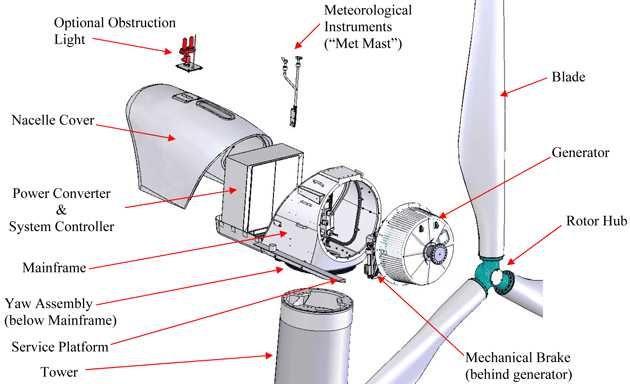
The Direct Drive Wind Turbine Market is emerging as a transformative force within the renewable energy landscape, redefining how wind energy is captured and converted into electricity. Unlike traditional geared turbines, direct drive systems eliminate the need for a gearbox—one of the most failure-prone and maintenance-intensive components—by connecting the rotor directly to the generator. This innovation not only enhances reliability and efficiency but also significantly reduces maintenance costs and mechanical losses. As the world intensifies its efforts toward decarbonization, the adoption of direct drive wind turbines is accelerating across onshore and offshore projects globally.
Market Drivers
One of the primary growth drivers of this market is the rising global demand for clean and sustainable energy. With nations committing to net-zero emissions targets and investing heavily in wind power infrastructure, direct drive systems have become increasingly attractive for utilities and developers seeking long-term reliability and cost efficiency.
The reduction in operational and maintenance (O&M) expenses is another crucial factor. Gearbox failures in conventional turbines can lead to costly downtimes and repairs. Direct drive systems eliminate that vulnerability, improving turbine availability and lowering lifecycle costs.
Additionally, technological advancements in permanent magnet generators (PMGs) have bolstered the efficiency of direct drive turbines. These magnets allow for compact designs, enhanced power density, and reduced friction, making them ideal for large-scale wind projects.
The expansion of offshore wind farms also supports market growth. Offshore environments demand robust and low-maintenance technologies, and direct drive turbines offer precisely that—high efficiency, reduced wear, and extended service intervals.
Market Challenges
Despite its advantages, the direct drive wind turbine market faces several challenges. One of the most significant barriers is the high initial capital cost. The use of rare-earth permanent magnets—mainly neodymium and dysprosium—raises manufacturing costs, creating dependence on limited global suppliers, primarily from China.
Additionally, transportation and installation complexities due to the larger size and heavier nacelles of direct drive systems pose logistical challenges, especially for onshore projects in remote or rugged terrains.
There are also technological standardization issues, as not all turbine manufacturers use the same generator configurations. Balancing cost, performance, and scalability remains an ongoing engineering challenge.
Opportunities
The shift toward offshore wind installations presents vast opportunities for direct drive technology. With higher wind speeds and larger turbines offshore, reliability and efficiency gains from gearbox-free systems become increasingly valuable.
Furthermore, growing research in rare-earth material alternatives could reduce manufacturing costs and supply chain vulnerabilities. Innovations such as superconducting generators and hybrid excitation systems are paving the way for more sustainable and cost-effective designs.
Emerging markets, particularly in Asia-Pacific, Latin America, and Eastern Europe, are expected to drive future demand as governments introduce renewable energy targets and auction programs encouraging wind energy expansion.
Additionally, digitalization and predictive maintenance systems powered by IoT and AI are enhancing turbine performance monitoring, reducing downtime, and optimizing energy output—further strengthening the business case for direct drive turbines.
Regional Insights
Europe currently leads the global direct drive wind turbine market, with countries like Germany, the UK, Denmark, and the Netherlands spearheading offshore wind expansion. Major European companies such as Siemens Gamesa and Enercon have been at the forefront of direct drive innovations, setting benchmarks in reliability and performance.
Asia-Pacific is rapidly emerging as the next growth hub, driven by massive renewable initiatives in China, India, Japan, and South Korea. China, in particular, has invested heavily in direct drive technology, with domestic manufacturers scaling production for both onshore and offshore projects.
In North America, increasing adoption of renewable energy policies and offshore wind development along the U.S. East Coast are fueling interest in direct drive systems.
Rest of the World regions—including Latin America and the Middle East—are gradually embracing wind power, offering untapped potential for direct drive deployment as infrastructure improves.
Future Outlook
The Direct Drive Wind Turbine Market is poised for strong growth in the coming decade, with continuous advancements in magnetic materials, generator efficiency, and smart monitoring systems. As the cost gap between geared and direct drive systems narrows, adoption is expected to accelerate, particularly in large-capacity offshore turbines exceeding 10 MW.
Manufacturers are focusing on scalability and modular designs to simplify assembly and reduce maintenance requirements. Collaborations between energy companies and technology developers will drive next-generation solutions tailored to diverse geographic and environmental conditions.
Ultimately, the transition toward gearless turbine architectures aligns perfectly with the global goal of achieving reliable, low-cost, and low-carbon energy generation.
Conclusion
In summary, the Direct Drive Wind Turbine Market represents the future of wind energy generation—efficient, durable, and sustainable. By eliminating mechanical complexities and enhancing reliability, these turbines are set to redefine cost structures and performance standards across the renewable energy sector. As global investments in offshore wind continue to surge, direct drive systems will play a critical role in powering a cleaner and more resilient energy future.

 English
 Arabic
 French
 Spanish
 Portuguese
 Deutsch
 Turkish
 Dutch
Dutch
 Italiano
 Russian
 Romaian
 Portuguese (Brazil)
