


Nut Welder: Precision Metal Joining for Modern Manufacturing
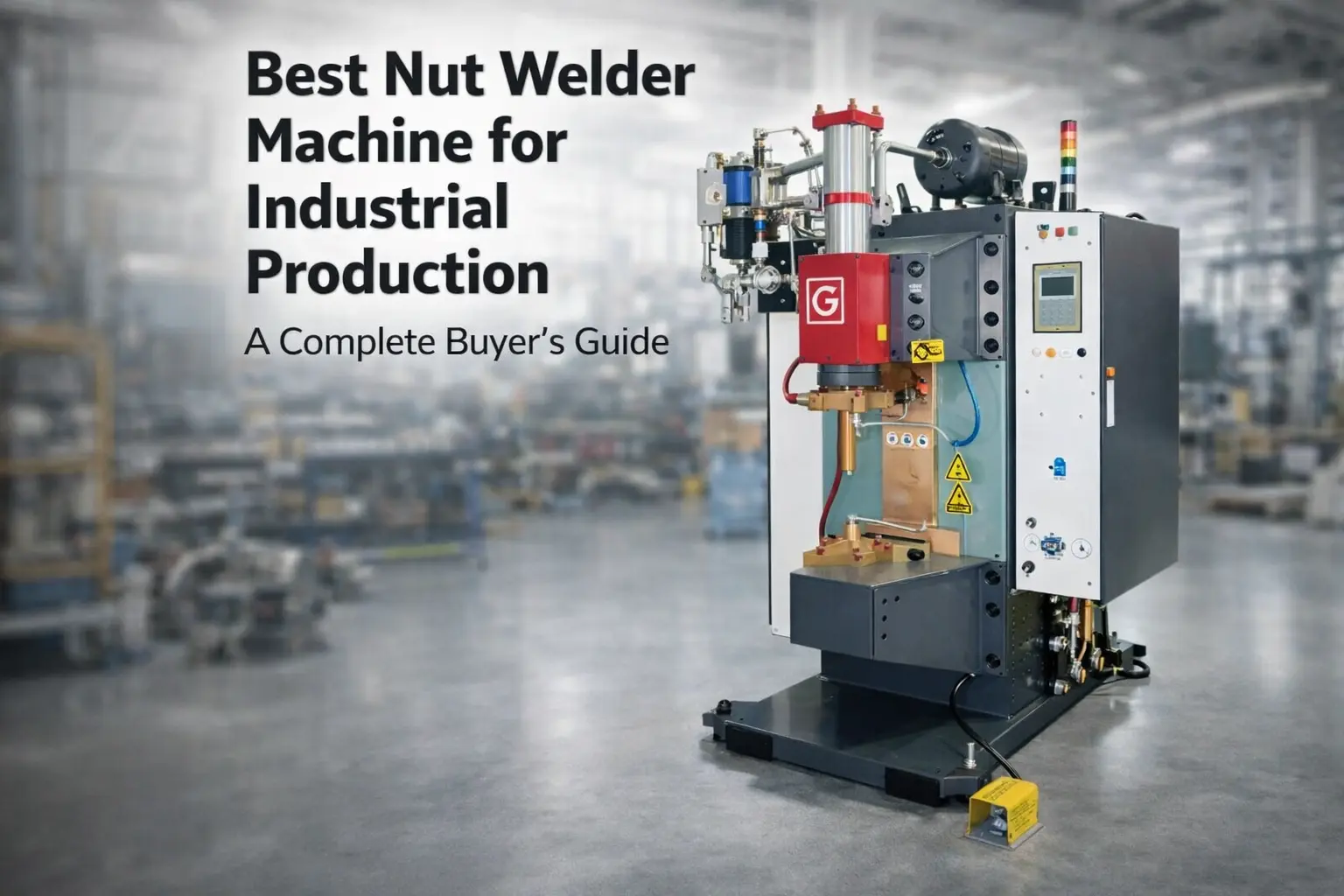
In today’s competitive manufacturing environment, efficient and reliable metal-joining solutions are essential for high-quality production. Among these, the nut welder has become a critical tool for factories aiming to streamline assembly, reduce manual labor, and ensure consistent weld quality. At Heron Welder, we specialize in advanced resistance welding and fastening technologies, providing engineers and OEMs with state-of-the-art equipment tailored for industrial applications.
What Is a Nut Welder?
A nut welder is a specialized welding machine designed to attach nuts, studs, or threaded fasteners onto metal components. Unlike traditional mechanical fastening, nut welding creates a permanent metallurgical bond between the nut and the workpiece. This method enhances joint strength, reduces assembly time, and eliminates the risk of loose fasteners.
Nut welders are commonly used in industries such as automotive, aerospace, appliance manufacturing, and industrial machinery, where precision and durability are non-negotiable.
How a Nut Welder Works: Principles of Operation
Nut welders typically use resistance welding principles. The process involves the following steps:
- Placement of Nut or Fastener – The nut is positioned on the metal surface either manually or via automated feeding systems.
- Current Application – The welding gun or electrode applies a controlled electric current through the nut and workpiece.
- Resistance Heating – Electrical resistance at the contact points generates localized heat, causing the surfaces to melt and fuse.
- Pressure Application – Simultaneous electrode pressure ensures proper bonding and solidification.
Depending on the design, Heron’s nut welders can handle spot welding for nuts, projection welding, or capacitor discharge welding for high-speed assembly lines. These methods allow precise control over weld strength and minimize distortion, making them suitable for thin sheets or critical components.
Key Applications of Nut Welders
Nut welding offers versatility across various industrial applications. Typical use cases include:
- Automotive Body Assembly: Welding nuts onto chassis, doors, and engine components to secure panels, brackets, and accessories.
- Appliance Manufacturing: Attaching fasteners to washing machines, refrigerators, and HVAC units without compromising aesthetics or material integrity.
- Industrial Equipment: Fastening control panels, frames, and metal housings efficiently in high-volume production lines.
- Aerospace and Defense: Ensuring precision and strength in structural components where mechanical fasteners alone may not suffice.
Heron’s nut welders are engineered to integrate seamlessly into automated production systems, offering consistent output and minimizing operator intervention.
Nut Welder vs. Other Metal Joining Methods
Choosing the right fastening technique is critical for cost efficiency and product reliability. Here’s how nut welding compares:
| Method | Advantages | Considerations |
|---|---|---|
| Nut Welding | Permanent bond, fast cycle times, minimal post-processing | Requires specific equipment, skilled setup |
| Mechanical Fastening | Flexible, easy to disassemble | Loosening risk, longer assembly time, potential vibration issues |
| Riveting | Strong joints for thin sheets | Less suitable for high-strength steel or automated high-speed lines |
| Adhesive Bonding | Smooth surface finish, vibration damping | Longer cure times, limited high-temperature resistance |
For manufacturers seeking repeatable, robust, and automation-friendly solutions, nut welding offers the optimal balance of speed, strength, and precision.
Best Practices for Nut Welding
To maximize performance and longevity of a nut welder, engineers and operators should follow these best practices:
- Material Compatibility: Select nuts and sheet metals suited for resistance or capacitor discharge welding.
- Proper Electrode Maintenance: Regularly inspect and clean electrodes to prevent contamination and ensure consistent welds.
- Correct Parameter Settings: Adjust current, pressure, and weld time according to material thickness and nut type.
- Integration with Automation: Pair nut welders with robotic or conveyor-fed systems to improve cycle times and reduce human error.
- Quality Control: Implement inline inspection and testing to ensure joint integrity and repeatability.
Heron Welder supports factories with customized solutions, including programmable controllers and modular tooling designed to adapt to different production requirements.
Why Choose Heron for Nut Welding Solutions
With decades of experience in industrial welding and metal-joining systems, Heron Welder provides cutting-edge nut welding machines that are:
- Reliable and Durable: Built for high-volume production with minimal maintenance.
- Flexible and Scalable: Capable of handling various nut sizes, materials, and assembly speeds.
- Automation-Ready: Easily integrated into robotic lines and advanced manufacturing systems.
- Expert-Supported: Comprehensive consultation, installation, and training to ensure maximum ROI.
Our engineers work closely with OEMs and factory decision-makers to deliver solutions that optimize productivity, quality, and cost-efficiency.
FAQs About Nut Welders
1. Can a nut welder handle different nut sizes?
Yes. Modern nut welders from Heron are adaptable to a range of nut diameters and thread types with modular tooling.
2. What materials are suitable for nut welding?
Most steels, stainless steels, and certain aluminum alloys are suitable. Material thickness and type will dictate the specific welding method.
3. How fast is nut welding compared to mechanical fastening?
Nut welding cycles can be as short as 0.5–2 seconds per joint, significantly faster than manual mechanical fastening, especially in high-volume automated lines.
4. Is nut welding safe for thin sheets?
Yes, with proper parameters and electrode design, nut welding minimizes distortion and provides strong bonds even on thin materials.
5. Can nut welders be integrated into existing production lines?
Absolutely. Heron provides customizable nut welding systems designed for robotic, conveyor, and hybrid automated setups.
Take the Next Step in Automated Metal Joining
Investing in a Heron nut welder means boosting your production efficiency, ensuring superior joint quality, and reducing manual labor costs. Whether you’re manufacturing automotive components, appliances, or industrial machinery, Heron provides tailored solutions that integrate seamlessly into modern automated production environments.
Contact Heron today to request a quote or consult our experts for customized welding and automation solutions that elevate your manufacturing process.

 English
 Arabic
 Spanish
 Portuguese
 Deutsch
 Turkish
 Dutch
Dutch
 Italiano
 Russian
 Romaian
 Portuguese (Brazil)
 Greek
Greek
