


Bare Metal Cloud Market Trends in Real-Time Data Processing
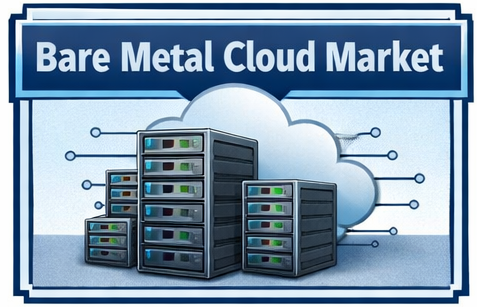
The evolution of enterprise IT infrastructure is entering a decisive phase, with the bare metal cloud emerging as a powerful alternative to traditional virtualization-based environments. As organizations increasingly demand performance, control, and security, this model—built around dedicated physical resources—has become central to modern cloud server hosting strategies.
The Rise of Bare Metal Cloud in Modern IT
At its core, a bare metal cloud delivers single-tenant infrastructure where a bare metal server is provisioned on demand, without the overhead of virtualization. Unlike shared environments, businesses gain direct access to hardware resources, ensuring predictable performance and enhanced reliability. This has made the model especially attractive for workloads such as AI training, big data analytics, and high-frequency transactions.
The shift is not accidental. Enterprises are actively re-evaluating their reliance on virtualized public cloud systems due to concerns around latency variability, cost inefficiencies, and lack of hardware control. In contrast, a dedicated cloud server offers consistent throughput and eliminates the “noisy neighbor” problem often seen in shared environments.
Market Momentum and Growth Outlook
The rapid adoption of this model is clearly reflected in market projections. Report published by Grand View Research indicates that the global bare metal cloud market is expected to reach USD 52.66 billion by 2033, growing at a CAGR of 21.4% from 2026 to 2033. This growth is fueled by rising demand for high-performance computing and secure infrastructure across industries.
In practical terms, this means organizations are increasingly migrating mission-critical workloads to bare metal cloud providers that can deliver both flexibility and raw computational power. The ability to combine cloud-like scalability with physical hardware isolation is proving to be a compelling value proposition.
Key Trends Shaping Bare Metal Adoption
One of the most significant trends is the convergence of cloud flexibility with dedicated infrastructure. Today’s cloud server hosting platforms allow businesses to deploy a bare metal server in minutes, bridging the historical gap between agility and performance.
Another trend is the growing role of hybrid architectures. Enterprises are no longer choosing between public cloud and bare metal—they are integrating both. For example, latency-sensitive applications may run on a dedicated cloud server, while less critical workloads remain on virtualized cloud systems.
Security and compliance are also major drivers. Industries such as BFSI, healthcare, and government require strict data isolation, which is inherently supported by bare metal environments. Since there is no shared tenancy, organizations can meet regulatory requirements more effectively while maintaining full control over their infrastructure.
Additionally, the rise of AI and machine learning workloads is accelerating demand. These applications require immense computational power and low latency, making a bare metal cloud provider a preferred choice over conventional virtual machines.
The Future of Cloud Infrastructure
Looking ahead, the bare metal cloud is not replacing traditional cloud computing—it is redefining it. Organizations are adopting a more nuanced approach, selecting infrastructure based on workload requirements rather than defaulting to virtualized solutions.
As bare metal cloud providers continue to innovate with faster provisioning, automation, and integrated services, the gap between traditional hardware and cloud environments will continue to narrow. The result is a new generation of cloud server hosting solutions that combine the best of both worlds: the power of a bare metal server and the flexibility of the cloud.
For enterprises aiming to optimize performance, control costs, and ensure compliance, the dedicated cloud server model is quickly becoming not just an option—but a strategic necessity.

 English
 French
 Spanish
 Portuguese
 Deutsch
 Turkish
 Dutch
Dutch
 Italiano
 Russian
 Romaian
 Portuguese (Brazil)
 Greek
Greek
