


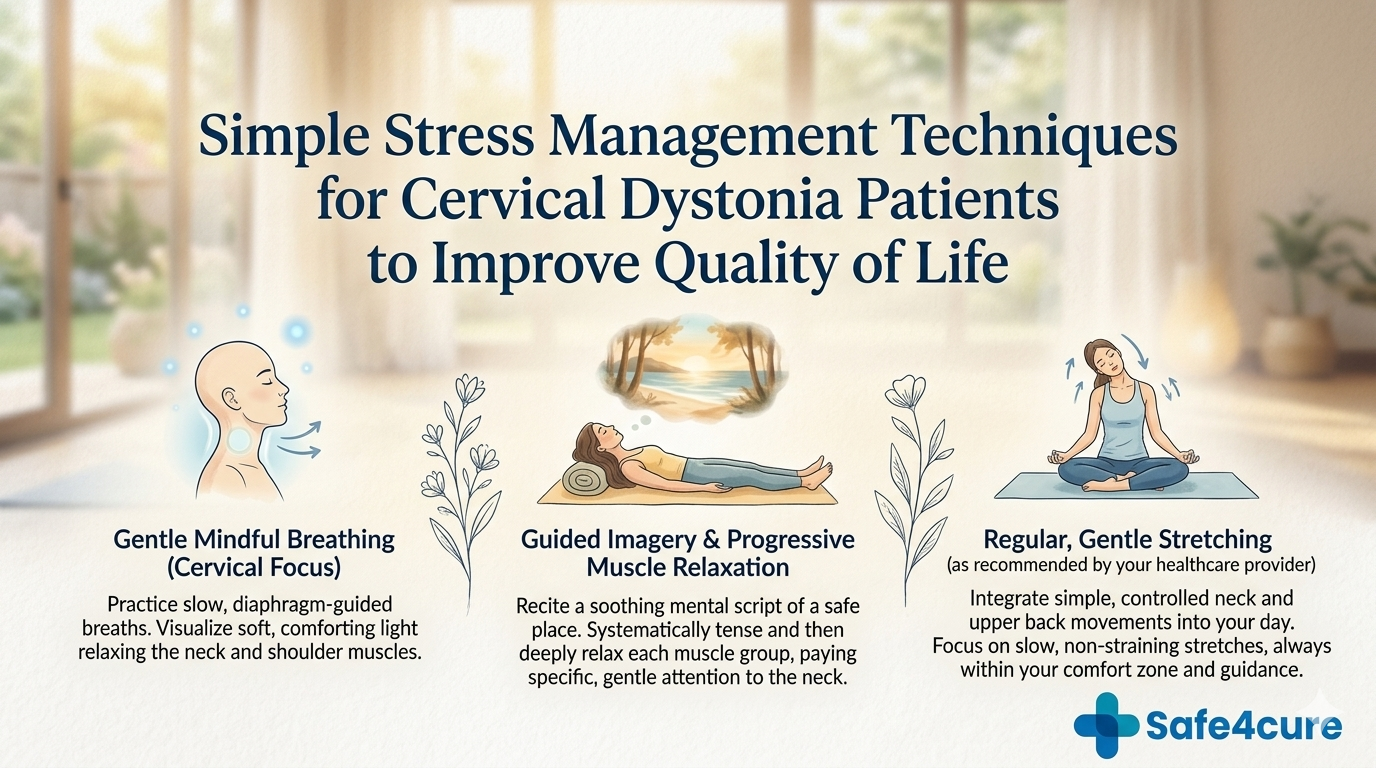
Simple Stress Management Techniques for Cervical Dystonia Patients to Improve Quality of Life
Cervical dystonia is a complex neurological disorder that affects thousands of Americans each year, often interfering with daily tasks, confidence, and overall well-being. Early treatment options, including botulinum toxin for cervical dystonia, have shown significant success in reducing muscle spasms and improving quality of life. If you or someone close to you is living with this condition, understanding effective management strategies can make a meaningful difference.
This comprehensive guide highlights simple, research-backed stress management techniques for cervical dystonia patients. Whether you’re newly diagnosed or have been coping with symptoms for years, these practical and actionable approaches can help you reduce discomfort, improve emotional balance, and regain better control over your daily life.
Understanding Cervical Dystonia: The Basics
What is Cervical Dystonia?
Cervical dystonia: Cervical dystonia is a neurological movement disorder characterised by involuntary muscle contractions in the neck, shoulders, and upper back. These contractions cause the head to turn, tilt, or pull in abnormal directions. The condition was previously called "spasmodic torticollis," though cervical dystonia is the more accurate medical term.
The cervical dystonia disease affects the motor neurons in the brain, specifically the basal ganglia region responsible for coordinating smooth, voluntary movements. Unlike a simple muscle spasm, cervical dystonia is a chronic neurological condition that requires proper medical management.
How Common is This Condition?
In the United States, cervical dystonia affects approximately 1 in 10,000 to 1 in 16,000 people. While it can develop at any age, it most commonly appears between the ages of 40 and 60. Women are slightly more likely to develop the condition than men.
Did You Know?
Cervical dystonia is the most common form of adult-onset focal dystonia in the US. Many people don't realize they have this condition initially, as symptoms can be subtle at first and gradually worsen over time.
Early Signs and Symptoms of Cervical Dystonia
Recognizing the early signs of cervical dystonia is crucial for early intervention and better outcomes. The symptoms of cervical dystonia vary from person to person, but common presentations include:
Common Symptom Patterns
- Involuntary head turning: The head pulls to one side uncontrollably (rotational dystonia)
- Neck tilting: The head tilts sideways without voluntary control (laterocollis)
- Forward or backward pulling: The head pulls forward (anterocollis) or backward (retrocollis)
- Shoulder elevation: One or both shoulders rise involuntarily
- Tremor and shaking: Involuntary trembling in the neck and shoulder areas
- Pain and stiffness: Chronic muscle tension leading to neck pain
- Limited range of motion: Difficulty turning your head in certain directions
How Cervical Dystonia Develops
Most cases of cervical dystonia appear suddenly or gradually without an obvious trigger. However, some cases may follow:
- Neck injuries or trauma
- Repetitive strain from work or sports
- Extreme stress periods
- Certain medications
The Stress-Dystonia Connection: Why Stress Makes It Worse
One of the most significant discoveries in cervical dystonia management is the strong connection between stress and symptom severity. Studies have shown that stress is not just a consequence of having dystonia—it's a major trigger that can dramatically worsen symptoms.
How Stress Aggravates Cervical Dystonia
When you experience stress, your body activates the "fight or flight" response, causing muscles throughout your body to tense involuntarily. For patients with cervical dystonia, this stress-induced muscle tension directly intensifies dystonic symptoms. The cycle becomes problematic:
Stress → Muscle Tension → Increased Dystonia Symptoms → Frustration → More Stress → Worsening Symptoms
Breaking this cycle through effective stress management is one of the most powerful tools you have in managing your condition.
Why Your Brain Matters
Cervical dystonia involves the basal ganglia and other brain regions responsible for motor control. Chronic stress affects these same areas, disrupting the delicate balance of neurotransmitters that control smooth movement. This is why addressing stress isn't optional—it's a fundamental part of treating the condition itself.
Effective Stress Management Techniques for Cervical Dystonia
1. Yoga and Meditation for Managing Cervical Dystonia Stress
Yoga and meditation have emerged as powerful tools for cervical dystonia patients. These ancient practices combine physical movement with mental relaxation, addressing both the physical and psychological aspects of stress.
Gentle Yoga Benefits:
- Improves flexibility without aggressive stretching
- Promotes body awareness and proprioception
- Reduces muscle tension through mindful movement
- Decreases cortisol (stress hormone) levels
Meditation Techniques:
- Mindfulness meditation: Focus on present-moment awareness without judgment
- Progressive relaxation: Systematically tense and relax muscle groups
- Guided meditation: Follow along with recorded sessions
- Breath work (Pranayama): Controlled breathing to calm the nervous system
Recommendation: Start with 10-15 minutes daily and gradually increase duration as you become more comfortable.
2. Building Your Daily Stress Management Routine for Cervical Dystonia
Consistency is key to stress management. A structured daily stress management routine for cervical dystonia helps train your nervous system to stay calm.
Sample Daily Routine (30 minutes)
- 7:00 AM: 5 minutes of deep breathing exercises
- 7:05 AM: 10 minutes of gentle stretching
- 7:15 AM: 10 minutes of meditation
- 7:25 AM: 5 minutes of journaling or gratitude practice
Result: You start your day with a calm nervous system, better equipped to handle stress triggers throughout the day.
3. Progressive Muscle Relaxation (PMR)
This technique involves systematically tensing and releasing muscle groups:
- Start with your feet. Tense muscles for 5 seconds, then release
- Move up through your legs, torso, arms, and neck
- Notice the contrast between tension and relaxation
- Practice 3-4 times weekly for best results
4. Cognitive Behavioural Strategies
Working with a therapist trained in Cognitive Behavioural Therapy (CBT) can help you:
- Identify stress triggers specific to your situation
- Develop coping mechanisms for difficult moments
- Challenge negative thought patterns about your condition
- Build resilience and emotional regulation
5. Lifestyle Modifications
Sleep optimisation: Aim for 7-9 hours nightly. Poor sleep worsens dystonia symptoms.
Nutrition: Anti-inflammatory foods like omega-3 fatty acids support neurological health.
Physical activity: Regular, gentle exercise improves mood and reduces stress hormones.
Social connection: Spend time with supportive friends and family—isolation worsens stress.
Limit caffeine and alcohol: Both can increase muscle tension and anxiety.
6. Biofeedback and Thermal Therapy
Biofeedback training helps you learn to control physiological responses. Heat therapy can also help reduce muscle tension—many patients find warm baths or heating pads helpful, especially before bed.
Cervical Dystonia Exercises: Movement That Helps
While exercise might seem counterintuitive for a movement disorder, properly designed cervical dystonia exercises can significantly improve outcomes. The key is gentleness and consistency.
Safe Stretching Guidelines
Gentle Neck Exercises
1. Chin Tucks (Cervical Retraction)
How to perform: Sitting upright, gently draw your chin straight back as if making a double chin. Hold for 3 seconds, then release. Repeat 10 times.
Benefit: Strengthens neck stabiliser muscles without forcing movement.
2. Gentle Rotations
How to perform: Slowly turn your head to one side only as far as comfortable (never to pain). Hold for 5 seconds. Return to the centre and repeat on the other side.
Benefit: Maintains range of motion without aggressive stretching.
3. Shoulder Shrugs and Rolls
How to perform: Lift shoulders toward ears, hold 2 seconds, release. Repeat 15 times. Then slowly roll your shoulders backward in smooth circles.
Benefit: Releases upper trapezius tension common in cervical dystonia.
4. Isometric Neck Exercises
How to perform: Place your hand against your head. Push gently against your hand without moving your head. Hold 5 seconds. Repeat for all directions (forward, backward, each side).
Benefit: Builds strength without movement, ideal for dystonia patients.
Yoga Poses for Cervical Dystonia
- Child's Pose: Gently stretches neck and shoulders
- Cat-Cow Stretch: Mobilises the entire spine
- Mountain Pose: Improves posture and body awareness
- Neck Rolls (gentle): Promotes mobility without forcing
Important: Many yoga classes aren't appropriate for dystonia patients. Look for instructors trained in therapeutic yoga or work one-on-one with a specialised physical therapist.
Cervical Dystonia Treatment Options in the United States
Understanding Your Treatment Choices
Treatment for cervical dystonia typically involves a combination of approaches. What works best varies from patient to patient, so working closely with a neurologist is essential.
1. Botulinum Toxin Therapy
Botulinum toxin for cervical dystonia is one of the most effective and widely used treatments. This FDA-approved therapy has changed the lives of thousands of Americans.
How Botulinum Toxin Works
Botulinum toxin works by blocking the release of acetylcholine, the neurotransmitter responsible for triggering muscle contractions. By interrupting this signal, the treatment helps relax overactive muscles and reduces involuntary movements without significantly affecting normal muscle function. A Botox shot is widely used to treat conditions such as chin dimpling, cervical dystonia, and bunny lines on the nose, offering both therapeutic and cosmetic benefits through targeted muscle relaxation.
Common Botox Brand Names
| Brand Name | Manufacturer | Characteristics |
|---|---|---|
| Botox | Allergan/AbbVie | Most commonly used, well-established dosing |
| Dysport | Ipsen | Spreads more widely, faster onset |
| Xeomin | Merz | No protein coating, less immunogenicity |
| Jeuveau | Evolus | Newer option with similar efficacy |
Botox Class Name and Medical Information
Botox class name: Botulinum toxin is classified as a neurotoxin specifically used for therapeutic purposes. In medical terminology, it's referred to as a "neuromuscular junction blocker" or "muscle relaxant."
Important clarification - Botox and controlled substances: Botox is NOT a controlled substance. While botulinum toxin in its natural form is a deadly neurotoxin, when used medically in minute, diluted doses for therapeutic purposes, it's FDA-approved and safe. It's regulated as a prescription medication, not a controlled substance like opioids or benzodiazepines.
Botox CNS considerations: While botulinum toxin acts on muscles, there's ongoing research about potential CNS (central nervous system) effects. Current medical consensus holds that therapeutic doses at injection sites remain localised, though emerging research continues to explore broader neurological effects.
Treatment Expectations
- Onset: Results typically appear within 3-7 days, with full effect at 2-3 weeks
- Duration: Effects last 12-16 weeks, requiring regular retreatment
- Efficacy: 85-90% of patients experience significant symptom improvement
- Cost: Typically $500-$2,000 per treatment (varies by location and dosing)
- Insurance: Most insurance plans cover botulinum toxin for dystonia treatment
Botox Indications for Cervical Dystonia
Botox indications for cervical dystonia specifically include treating involuntary muscle contractions causing abnormal head positioning. The FDA approved botulinum toxin for cervical dystonia in 1989, making it one of the longest-established uses.
Who benefits most: Patients with moderate to severe symptoms, those who haven't responded to oral medications, and those seeking to avoid side effects from pharmaceutical interventions.
2. Oral Medications
Several medications can help manage cervical dystonia symptoms:
- Anticholinergics: Benztropine, trihexyphenidyl (first-line oral treatment)
- Muscle relaxants: Baclofen, tizanidine
- Beta-blockers: Propranolol (helps with tremor)
- Benzodiazepines: Clonazepam (for anxiety and muscle tension, used cautiously due to dependency risk)
Note: Oral medications often have limited effectiveness and side effects. Many neurologists prefer botulinum toxin therapy when available.
3. Physical Therapy and Occupational Therapy
Specialised therapy tailored to dystonia is crucial for any treatment plan. Look for therapists with specific experience in dystonia management.
4. Surgical Options
For patients who don't respond to other treatments, deep-brain stimulation (DBS) surgery is an option. This advanced procedure involves implanting electrodes in specific brain regions to normalise motor control.
How I Cured My Cervical Dystonia: Real Patient Approaches
While "cured" is rarely the right word for a chronic neurological condition like cervical dystonia, many patients achieve remarkable remission through dedicated treatment and lifestyle management. Here are real-world success stories.
Multi-Modal Treatment Success
James's Story (Ohio)
The Challenge: James developed cervical dystonia at age 45. His head pulled severely to the right, affecting his work as an engineer and his social life. Early treatments with oral medications produced minimal improvement.
The Solution:
- Started botulinum toxin therapy (Botox) every 12 weeks
- Committed to daily 20-minute yoga practice
- Worked with a dystonia-specialised physical therapist twice weekly
- Implemented stress management through meditation
- Improved sleep hygiene (7-8 hours nightly)
The Results: Within 6 months, James's symptoms improved 70%. He returned to normal work activities and social engagement. He continues this regimen and maintains excellent symptom control.
Maria's Story (California)
The Challenge: Maria's cervical dystonia caused forward-pulling (anterocollis) and severe neck pain. Traditional treatments weren't addressing her stress-exacerbated symptoms.
The Solution:
- Combined botulinum toxin therapy with CBT and stress management
- Focused heavily on yoga and meditation for managing cervical dystonia stress
- Changed career to reduce workplace stress
- Built a support community of other dystonia patients
The Results: After a year of dedicated work, Maria's symptoms reduced by 60%, and her quality of life improved dramatically. She's now an advocate helping other patients.
Building Your Personal Recovery Plan
Creating a successful treatment plan typically involves:
- Medical optimisation: Finding the right botulinum toxin therapy schedule with your neurologist
- Physical rehabilitation: Working with specialised physical therapists
- Mental health support: Addressing anxiety and depression common with chronic conditions
- Daily stress management: Building habits that reduce your symptom triggers
- Community support: Connecting with others who understand your experience
- Patience and persistence: Recovery takes time; celebrate small improvements.
Resources and Support for Your Journey
Organizations and Communities
The Dystonia Society
Comprehensive information about all forms of dystonia, including cervical dystonia. Offers support groups, educational resources, and connections to specialists throughout the US.
Website: dystonia-society.org
National Institute of Neurological Disorders and Stroke (NINDS)
Federal resource providing research updates, treatment information, and clinical trial opportunities for cervical dystonia and other movement disorders.
Website: ninds.nih.gov
Movement Disorder Society
Professional organisation connecting patients with movement disorder specialists nationwide. Excellent for finding qualified neurologists.
Website: movementdisordersociety.org
Finding Support
- Join online communities and support groups specific to cervical dystonia
- Connect with other patients who understand your experience
- Work with therapists trained in chronic illness management
- Educate family members about your condition
- Share your story to help others feel less alone
Final Thoughts: Taking Control of Your Cervical Dystonia
Living with cervical dystonia presents challenges, but thousands of Americans are managing their symptoms effectively and maintaining an excellent quality of life. The key is taking a comprehensive, multi-modal approach combining medical treatment with lifestyle management and stress reduction.

 English
 Arabic
 French
 Spanish
 Portuguese
 Turkish
 Dutch
Dutch
 Italiano
 Russian
 Romaian
 Portuguese (Brazil)
 Greek
Greek
