


How Is Real Estate Tokenization Development Simplifying Cross-Border Real Estate Investments?
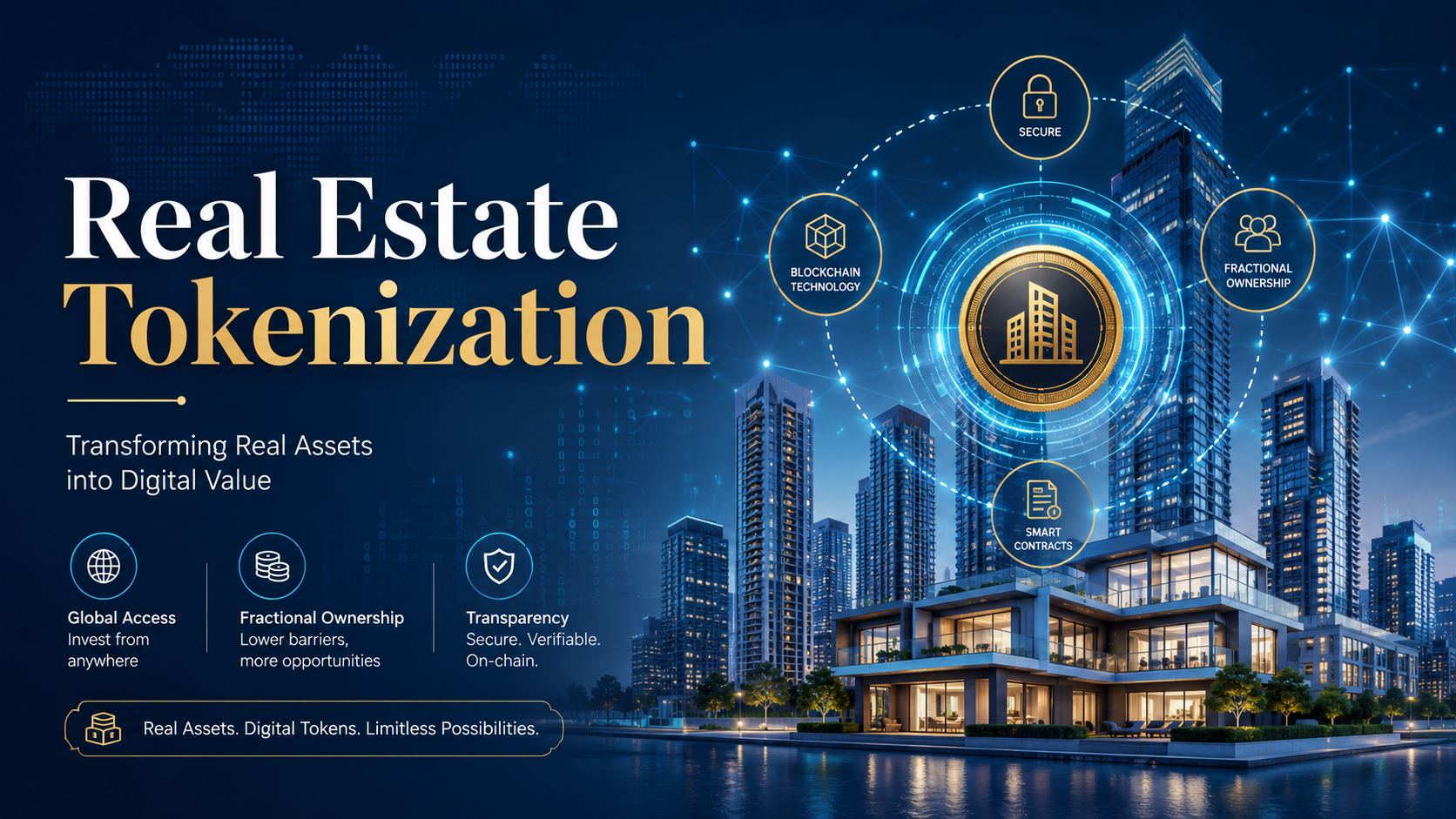
The global real estate market has traditionally been one of the most difficult sectors for international investors to access. Cross-border property investments often involve complex legal systems, currency conversion challenges, high transaction costs, intermediaries, banking delays, and strict regulatory procedures. These barriers have historically limited global property ownership to institutional investors and high-net-worth individuals.
However, blockchain technology is transforming this structure through Real Estate Tokenization Development. By converting physical properties into digital blockchain-based tokens, tokenization is making global real estate investment more accessible, transparent, liquid, and efficient. Investors can now purchase fractional ownership in properties located across different countries without navigating the traditional burdens of international property acquisition.
Understanding Real Estate Tokenization
Real estate tokenization refers to the process of converting ownership rights of a property into digital tokens stored on a blockchain network. These tokens represent fractional ownership of the underlying asset and can be bought, sold, or traded digitally. Instead of requiring a single buyer to purchase an entire building or property, tokenization divides ownership into smaller units. Investors purchase these digital shares and gain exposure to rental income, asset appreciation, and other investment benefits proportional to their holdings.
The tokenization process generally includes:
- Asset evaluation and legal structuring
- Creation of smart contracts
- Fractional division of ownership
- Blockchain-based token issuance
- Investor onboarding and compliance verification
- Secondary marketplace integration
The Traditional Challenges of Cross-Border Real Estate Investment
Before understanding how real estate tokenization simplifies global investments, it is important to recognize the challenges that traditionally made international property investment difficult.
Legal Complexity Across Jurisdictions
Every country has unique property ownership laws, taxation frameworks, registration systems, and foreign investment regulations. International investors often need legal advisors, brokers, escrow services, and compliance consultants to navigate these systems. The documentation process alone can take weeks or months, especially when verifying ownership records and handling title transfers.
High Capital Requirements
Cross-border property investment usually requires substantial capital. Investors must purchase full ownership or large equity portions of properties, limiting participation to wealthy individuals or institutions.
Additionally, international investments involve expenses such as:
- Legal fees
- Registration costs
- Cross-border banking fees
- Currency conversion charges
- Property management expenses
- Tax obligations
These costs increase entry barriers significantly.
Illiquidity
Real estate is traditionally an illiquid asset class. Selling an overseas property can take months due to paperwork, negotiations, financing approvals, and jurisdiction-specific regulations. For international investors, liquidity challenges become even greater because finding buyers across borders is often slower and more expensive.
Currency and Banking Delays
Cross-border transactions frequently involve foreign exchange conversion, banking intermediaries, international transfer approvals, and settlement delays. Traditional property transactions can require multiple intermediaries, each adding time and transaction costs to the process.
Limited Transparency
International investors often struggle with limited access to reliable property information. Fraud risks, ownership disputes, inaccurate valuation reports, and opaque transaction histories remain significant concerns in many markets. Blockchain-based systems are helping address these transparency challenges through immutable digital ledgers and verifiable transaction records.
How Real Estate Tokenization Simplifies Cross-Border Investments
Fractional Ownership Reduces Entry Barriers
One of the biggest advantages of tokenization is fractional ownership. Instead of purchasing an entire property worth millions of dollars, investors can buy smaller tokenized shares. This significantly lowers the capital required for international real estate participation.
For example, an investor in India can purchase tokenized shares in a commercial property located in Dubai, London, or New York without acquiring the full asset. This democratizes access to global real estate markets that were previously inaccessible to smaller investors. Industry reports show that some tokenized platforms allow participation starting from as little as $50 to $100.
Blockchain Eliminates Geographic Restrictions
Traditional cross-border investments require investors to physically visit countries, complete paperwork, coordinate with local agents, and establish banking relationships. Tokenization platforms simplify this process through blockchain-based digital ecosystems. Investors can complete transactions online using digital wallets and blockchain infrastructure.
This creates borderless investment accessibility where investors can diversify globally without geographic limitations. As blockchain networks operate continuously, tokenized assets can also support faster settlement and global trading accessibility compared to conventional real estate systems.
Smart Contracts Automate Transactions
Smart contracts are self-executing blockchain programs that automate investment agreements, ownership transfers, compliance procedures, and income distribution. These automated systems reduce dependence on intermediaries such as brokers, escrow agents, and settlement coordinators.
Smart contracts simplify:
- Investor onboarding
- Rental income distribution
- Ownership verification
- Dividend payouts
- Compliance execution
- Transfer approvals
- Transaction settlements
Automation reduces administrative delays and operational costs while increasing efficiency in international transactions.
Improved Transparency and Security
Blockchain technology creates immutable transaction records that cannot be easily altered or manipulated. Every transaction is permanently recorded on-chain, providing investors with enhanced visibility into ownership history and fund movements.
This transparency improves investor confidence in cross-border markets where information asymmetry and fraud risks have historically been major concerns. On-chain verification systems also help simplify auditing, compliance tracking, and ownership validation. Research studies highlight blockchain’s ability to improve record accuracy, reduce disputes, and create transparent investment environments in real estate ecosystems.
Faster Settlement and Reduced Intermediaries
Traditional international property settlements often take weeks due to bank processing, legal coordination, escrow handling, and document verification. Tokenized real estate platforms streamline these processes through blockchain infrastructure and digital asset transfer systems.
By reducing intermediaries, tokenization decreases:
- Transaction fees
- Processing delays
- Documentation burdens
- Settlement complexity
Recent developments in tokenized financial infrastructure demonstrate how blockchain networks are enabling near real-time cross-border asset settlements.
Secondary Market Liquidity
One of the largest problems in traditional real estate investing is illiquidity. Tokenization introduces the possibility of secondary marketplace trading, where investors can sell tokenized property shares without waiting for the entire property to be sold.
This creates more flexible exit opportunities for international investors. Instead of holding property investments for years, investors can potentially trade their tokenized shares similarly to digital securities, depending on platform regulations and market availability. This increased liquidity is one of the primary reasons institutional investors are exploring tokenized real estate markets.
Simplified Income Distribution
Managing international rental income traditionally involves complex banking systems, taxation procedures, and cross-border payment delays. Tokenization platforms automate income distribution using smart contracts. Rental profits can be distributed directly to token holders through stablecoins or digital payment systems. This improves operational efficiency while reducing payment delays and administrative overhead. Automated income systems also provide greater transparency regarding revenue allocation and investor distributions.
Greater Portfolio Diversification
Cross-border tokenization allows investors to diversify across multiple global property markets without needing massive capital reserves.
Instead of investing in a single property, investors can allocate smaller amounts across:
- Residential properties
- Commercial buildings
- Hotels
- Warehouses
- Luxury real estate
- Mixed-use developments
- International property funds
This diversification helps reduce concentration risk while expanding access to global real estate opportunities. Tokenization is increasingly being viewed as part of broader multi-asset investment ecosystems that combine real estate with other tokenized financial instruments.
The Role of Compliance in Cross-Border Tokenization
Despite its advantages, real estate tokenization still requires strong regulatory compliance frameworks. Cross-border investments involve securities laws, anti-money laundering (AML) regulations, Know Your Customer (KYC) requirements, taxation rules, and investor protection standards. Modern Real Estate Tokenization Development platforms integrate compliance tools directly into their systems.
These include:
- Digital identity verification
- Automated KYC/AML checks
- Jurisdiction-based investor restrictions
- Smart contract compliance enforcement
- Permissioned trading systems
Regulatory clarity remains one of the most important factors influencing institutional adoption. Recent global regulatory developments show governments increasing oversight of tokenized assets while simultaneously exploring frameworks for legal adoption.
Institutional Interest Is Growing
Institutional participation in tokenized real estate is accelerating rapidly. Major financial institutions and asset managers are increasingly exploring tokenized real-world assets because blockchain infrastructure can improve settlement efficiency, operational transparency, and capital accessibility. Reports indicate growing experimentation with tokenized Treasurys, real estate assets, and digital securities among global financial institutions. Large-scale real estate firms have also publicly discussed plans to tokenize portions of their portfolios as the industry shifts toward digital asset infrastructure.
Real Estate Tokenization Development Components
A successful tokenization platform requires multiple technological and legal components working together.
Blockchain Infrastructure
The blockchain network stores token ownership records, transaction history, and smart contract execution. Common blockchain choices include Ethereum-compatible ecosystems and permissioned enterprise networks.
Smart Contract Architecture
Smart contracts manage:
- Ownership logic
- Revenue distribution
- Compliance rules
- Governance systems
- Investor permissions
These contracts automate many operational functions traditionally handled manually.
Asset Legal Structuring
Properties are typically placed into Special Purpose Vehicles (SPVs) or legal entities that connect blockchain tokens to real-world ownership rights. This legal linkage is essential for enforceability.
Investor Dashboard Systems
Modern platforms include investor portals where users can:
- Track investments
- Monitor yields
- Access reports
- View transaction history
- Trade tokens
Secondary Marketplace Integration
Secondary trading functionality increases liquidity by allowing investors to exchange tokenized property shares on regulated marketplaces.
Challenges Still Facing Cross-Border Tokenization
Although tokenization simplifies many investment barriers, some challenges remain.
Regulatory Fragmentation
Different countries maintain different digital asset laws, securities frameworks, and investor protection standards. Cross-border compliance remains complex and continues evolving.
Legal Enforceability
Blockchain ownership records alone are insufficient unless properly connected to legal property ownership structures. Legal enforceability remains critical for investor protection.
Market Liquidity Depth
Secondary marketplaces for tokenized real estate are still developing. While liquidity potential exists, trading volumes remain limited compared to traditional financial markets.
Investor Education
Many investors still lack understanding of blockchain technology, wallet security, smart contracts, and tokenized asset structures. Education and user-friendly platforms are essential for broader adoption. Industry discussions increasingly acknowledge that long-term success depends on combining technological efficiency with strong legal frameworks and institutional-grade compliance.
The Future of Borderless Real Estate Investment
Real Estate Tokenization Development is gradually transforming property ownership into a more globally accessible and digitally connected ecosystem. As blockchain infrastructure matures, tokenization may eventually create a financial environment where real estate assets move more efficiently across borders, similar to digital financial securities.
Emerging trends shaping the future include:
- Integration with decentralized finance (DeFi)
- Tokenized mortgage systems
- Cross-chain asset interoperability
- AI-powered property analytics
- Digital identity verification systems
- On-chain compliance automation
- Institutional-grade tokenized securities markets
Industry forecasts suggest that tokenized real-world assets could grow substantially during the next decade as financial institutions, regulators, and technology providers continue building supporting infrastructure.
Conclusion
Real Estate Tokenization Development is simplifying cross-border real estate investments by reducing traditional barriers associated with global property ownership. Through blockchain technology, smart contracts, fractional ownership, and digital marketplaces, tokenization creates a more accessible, transparent, and efficient investment environment.
Investors no longer need massive capital reserves or extensive international legal coordination to access global real estate opportunities. Instead, tokenized ecosystems allow borderless participation, automated transactions, faster settlements, and improved liquidity. Although regulatory and legal challenges still exist, the growing institutional interest in tokenized real-world assets indicates that blockchain-powered property investment is becoming an increasingly important part of the future financial landscape.

 English
 French
 Spanish
 Portuguese
 Deutsch
 Turkish
 Dutch
Dutch
 Italiano
 Russian
 Romaian
 Portuguese (Brazil)
 Greek
Greek
