


Why Marketers Are Shifting Toward AI Driven Account Based Engagement Models
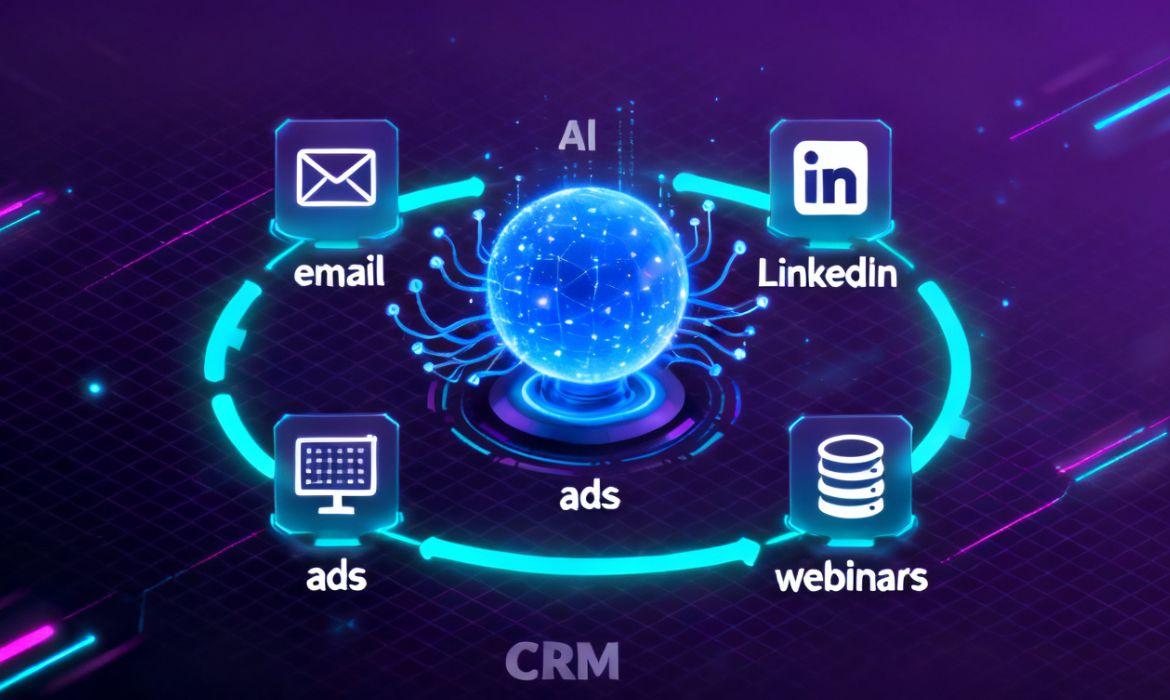
The B2B marketing landscape is undergoing a major transformation as organizations move away from traditional outreach methods and adopt intelligent, data driven engagement systems. This shift is largely driven by the rise of AI driven account based engagement models that allow marketers to engage high value accounts with precision, consistency, and real time adaptability.
Modern buyers no longer respond to generic campaigns. They expect contextual communication that reflects their needs, intent, and stage in the decision making process. AI driven account based engagement models enable marketers to meet these expectations by orchestrating personalized interactions across multiple digital channels while continuously learning from user behavior.
This evolution is not just a tactical upgrade. It represents a structural change in how B2B organizations attract, nurture, and convert enterprise accounts.
Evolution from Traditional ABM to Intelligent Engagement Systems
Traditional account based marketing relied heavily on static segmentation and manually executed campaigns. While this approach helped organizations target specific accounts, it lacked flexibility and real time responsiveness.
AI driven account based engagement models solve this limitation by introducing automation and intelligence into every stage of the buyer journey. Instead of fixed campaign flows, these models dynamically adjust based on behavioral triggers such as website visits, content downloads, email interactions, and intent signals.
This shift enables marketers to move from campaign based thinking to journey based orchestration. Every account receives a continuously evolving experience that adapts to their engagement patterns.
Role of Data Intelligence in Engagement Transformation
Data is the foundation of AI driven account based engagement models. Without accurate and enriched data, personalization and targeting cannot achieve meaningful impact.
Modern systems aggregate data from multiple sources including CRM platforms, marketing automation tools, intent data providers, and behavioral tracking systems. This unified data ecosystem allows marketers to build a complete view of each account.
AI driven account based engagement models use this data to identify buying signals, detect engagement readiness, and prioritize accounts with higher conversion potential. This ensures that marketing efforts are focused on the most valuable opportunities rather than broad, inefficient outreach.
Personalization at Scale Across Complex Buyer Journeys
One of the most significant advantages of AI driven account based engagement models is the ability to deliver personalization at scale. In complex B2B environments, decision making involves multiple stakeholders with different priorities and pain points.
AI systems analyze behavioral patterns and firmographic attributes to create highly tailored messaging for each account. This ensures that every interaction feels relevant and meaningful.
AI driven account based engagement models continuously refine personalization strategies by learning from engagement outcomes. If certain content formats or messaging styles perform better, the system automatically adjusts future interactions accordingly.
Multi Channel Orchestration for Consistent Messaging
Modern B2B buyers interact with brands across multiple touchpoints including email, social media, search engines, display ads, and company websites. Maintaining consistency across these channels is critical for building trust and improving engagement.
AI driven account based engagement models ensure seamless orchestration across all channels. When a prospect engages with one touchpoint, the system automatically triggers aligned actions across other platforms.
For example, if an account downloads a whitepaper, the system can initiate a targeted email sequence while simultaneously adjusting paid ad messaging. This ensures that every channel reinforces the same narrative, improving brand recall and engagement continuity.
Predictive Insights Driving Smarter Engagement Decisions
Predictive analytics plays a crucial role in AI driven account based engagement models. Instead of reacting to past behavior, marketers can now anticipate future actions.
Machine learning algorithms analyze historical engagement data to predict which accounts are most likely to convert. This allows organizations to prioritize high intent accounts and allocate resources more effectively.
AI driven account based engagement models also use predictive scoring to determine the optimal timing for outreach. This ensures that communication happens when accounts are most receptive, improving response rates and conversion probability.
Sales and Marketing Alignment Through Intelligent Systems
One of the persistent challenges in B2B organizations has been the misalignment between sales and marketing teams. AI driven account based engagement models help solve this issue by creating a unified data environment.
Both teams gain access to the same real time insights, allowing them to collaborate more effectively. Marketing teams can design engagement journeys while sales teams receive timely alerts about account behavior and readiness signals.
This alignment improves lead quality, reduces friction in handoffs, and accelerates pipeline progression.
Automation Enhancing Efficiency and Scalability
Scalability is a major challenge in traditional ABM programs. AI driven account based engagement models address this by automating repetitive tasks such as campaign execution, lead scoring, content distribution, and engagement tracking.
Automation ensures that no opportunity is missed and that every account receives timely communication. It also reduces manual workload, allowing teams to focus on strategy and creative optimization.
As a result, organizations can scale ABM programs without proportionally increasing operational complexity.
Continuous Optimization Through Real Time Feedback
AI driven account based engagement models are built on continuous learning systems. Every interaction generates data that is analyzed to improve future performance.
Key metrics such as engagement rates, conversion rates, and pipeline velocity are monitored in real time. Based on these insights, the system automatically optimizes messaging, channel mix, and engagement frequency.
This continuous optimization loop ensures that campaigns become more efficient over time, delivering stronger ROI and improved customer experiences.
Important Information for Strategic Implementation
Successful implementation of AI driven account based engagement models requires a strong foundation of clean and structured data. Organizations must ensure that all marketing and sales systems are properly integrated to enable seamless data flow.
Equally important is the alignment between teams. Without collaboration between sales, marketing, and analytics teams, the full potential of AI driven account based engagement models cannot be realized.
Organizations should also invest in ongoing model training and content optimization to ensure that AI systems continue to improve over time. This includes refining segmentation strategies, updating intent signals, and continuously testing engagement workflows.
AI driven account based engagement models represent a long term strategic shift rather than a short term tactical upgrade. Businesses that adopt this approach early will gain a significant competitive advantage in building predictable revenue pipelines.
At Acceligize, we help entrepreneurs, small businesses, and professionals grow with actionable insights, strategies, and tools. Our experts simplify complex ideas in business development, marketing, operations, and emerging trends, turning challenges into opportunities. Whether you’re scaling, pivoting, or launching, we provide the guidance to navigate today’s dynamic marketplace. Your success is our priority because when you thrive, we thrive.

 English
 Arabic
 French
 Spanish
 Portuguese
 Deutsch
 Dutch
Dutch
 Italiano
 Russian
 Romaian
 Portuguese (Brazil)
 Greek
Greek
