


The Role of SCR Technology in Reducing Marine NOx Emissions
Introduction
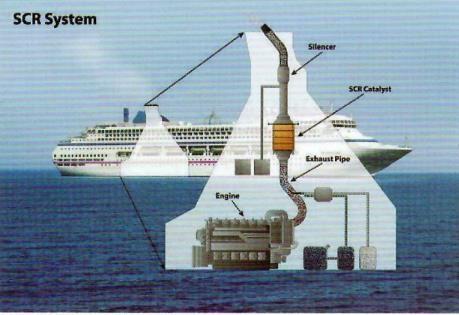
The Marine Selective Catalytic Reduction (SCR) System Market is a critical segment of the maritime emission control and environmental compliance industry, focused on reducing nitrogen oxide (NOx) emissions from marine engines. Marine SCR systems use a catalyst and a reducing agent—typically urea-based diesel exhaust fluid—to convert NOx in exhaust gases into harmless nitrogen and water. These systems are installed on a wide range of vessels, including cargo ships, tankers, ferries, offshore support vessels, cruise ships, and naval platforms. With international maritime regulations tightening limits on NOx emissions, particularly in emission control areas, SCR systems have become essential technologies for compliance. As ship operators seek reliable, proven solutions to meet regulatory requirements without compromising engine performance, marine SCR systems are playing an increasingly important role in modern vessel design and retrofit strategies.
Market Drivers
One of the primary drivers of the Marine SCR System Market is the enforcement of stringent international emission regulations governing NOx emissions from marine engines. Regulatory frameworks require significant reductions in NOx output for new vessels and, in some cases, for existing fleets operating in regulated waters. Compliance with these standards is a major catalyst for SCR system adoption. Another key driver is the continued dominance of internal combustion engines in marine propulsion and auxiliary power generation. Since many vessels rely on diesel or dual-fuel engines, SCR systems offer a practical and effective after-treatment solution without requiring a complete change in propulsion technology. Growth in global shipping, offshore energy activities, and passenger transport is also contributing to increased installation of SCR systems on newbuild vessels. Additionally, rising awareness of environmental responsibility and corporate sustainability commitments among ship owners is encouraging proactive investment in emission reduction technologies.
Market Challenges
Despite strong regulatory support, the Marine SCR System Market faces several challenges. High capital cost associated with SCR system installation, particularly for retrofit projects, can be a barrier for smaller operators. Space constraints onboard vessels complicate system integration, as SCR units, urea tanks, dosing equipment, and exhaust piping require careful design and layout. Operational complexity is another challenge, as SCR systems depend on proper urea handling, storage, and dosing to function effectively. Poor-quality urea or incorrect operation can reduce performance or damage catalysts. Additional maintenance requirements and catalyst replacement over time increase lifecycle costs. In cold climates or low-load operating conditions, maintaining optimal exhaust temperature for efficient NOx reduction can be difficult, potentially limiting system effectiveness. Fuel sulfur content and exhaust composition can also impact catalyst life and performance.
Market Opportunities
The market presents strong opportunities driven by fleet modernization and technology advancement. Retrofit of existing vessels represents a major growth area, as ship owners seek to extend vessel life while meeting emission requirements. Development of compact and modular SCR designs is improving feasibility for space-constrained vessels and smaller ship classes. Integration of SCR systems with digital monitoring and control platforms enhances performance optimization, diagnostics, and compliance reporting. Growth in dual-fuel and alternative-fuel engines creates opportunities for SCR systems optimized for varying exhaust characteristics. Emerging markets with expanding shipping and offshore activity offer additional potential, particularly as regulatory enforcement strengthens. Collaboration between engine manufacturers and SCR system suppliers is also driving integrated solutions that simplify installation and improve overall system efficiency.
Regional Insights
Europe holds a significant share of the Marine SCR System Market due to early adoption of stringent environmental regulations, dense shipping routes, and strong enforcement in emission control areas. Shipbuilders and operators in this region have widely adopted SCR technology for compliance. Asia-Pacific represents a rapidly growing market driven by large shipbuilding capacity, expanding maritime trade, and increasing regulatory alignment with international emission standards. North America is a mature market supported by emission control requirements in coastal and inland waters, as well as demand from passenger ferries and offshore vessels. The Middle East shows growing adoption linked to offshore energy activities and modernization of fleets operating in regulated waters. Latin America and Africa are emerging markets, where adoption is gradually increasing as regulatory frameworks evolve and environmental awareness grows.
Future Outlook
The future outlook for the Marine SCR System Market is positive as emission regulations continue to tighten and enforcement expands geographically. SCR technology is expected to remain a preferred solution for NOx reduction due to its proven effectiveness and compatibility with existing engine platforms. Technological advancements will focus on improving catalyst durability, reducing system size, and enhancing performance under variable operating conditions. Integration with hybrid propulsion systems and advanced engine control technologies will further optimize emission reduction. As the maritime industry progresses toward cleaner operations, SCR systems will remain a key component of compliance strategies, particularly during the transition to alternative fuels and low-carbon propulsion.
Conclusion
The Marine Selective Catalytic Reduction System Market is a vital enabler of environmental compliance in the global maritime industry. Driven by strict NOx emission regulations, continued reliance on combustion engines, and growth in maritime activity, the market continues to expand. While challenges related to cost, space, and operational complexity persist, innovation and modular system designs are improving adoption and performance. As shipping and offshore industries balance regulatory compliance with operational efficiency, marine SCR systems are set to remain essential technologies for reducing emissions and supporting sustainable maritime operations.

 English
 Arabic
 Spanish
 Portuguese
 Deutsch
 Turkish
 Dutch
Dutch
 Italiano
 Russian
 Romaian
 Portuguese (Brazil)
 Greek
Greek
