


The Role of Rail Wheels in Freight and Passenger Rail
Introduction
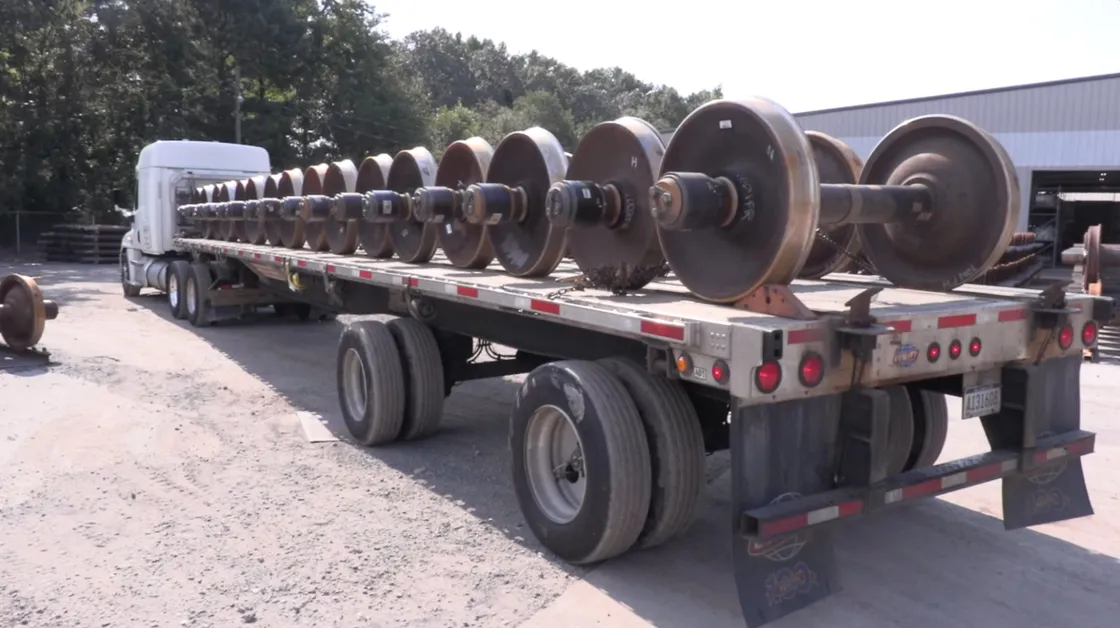
The Rail Wheel Market is a fundamental segment of the railway components and rolling stock industry, supplying wheels that support, guide, and transmit loads between rail vehicles and tracks. Rail wheels are critical to the safety, efficiency, and performance of passenger trains, freight wagons, locomotives, metros, and high-speed rail systems. Designed to withstand high loads, cyclic stresses, thermal effects from braking, and varying track conditions, rail wheels directly influence ride quality, maintenance costs, and operational reliability. As global rail networks expand and modernize to meet growing passenger and freight demand, the rail wheel market remains a core enabler of rail transport performance and safety.
Market Drivers
One of the primary drivers of the Rail Wheel Market is the expansion and modernization of railway infrastructure. Governments worldwide are investing heavily in new rail lines, metro systems, high-speed corridors, and freight networks to improve mobility, reduce congestion, and lower emissions. Each new rail vehicle requires multiple wheelsets, and infrastructure upgrades often trigger fleet expansion, directly driving demand for new rail wheels.
The growth of freight rail transport is another major driver. Rail is increasingly favored for bulk commodities and long-distance freight due to its cost efficiency and lower environmental impact compared to road transport. Rising movement of coal, minerals, agricultural products, containers, and industrial goods increases wear on existing wheelsets, creating steady replacement demand alongside new wagon procurement.
Maintenance, repair, and replacement demand also significantly support market growth. Rail wheels are subject to wear, fatigue, thermal damage, and profile degradation over time. Regular inspection and periodic replacement are essential to ensure safety and compliance with railway standards. Even in mature rail markets with limited new rolling stock production, replacement and aftermarket demand remains strong and predictable.
Market Challenges
Despite steady demand, the Rail Wheel Market faces several challenges. High manufacturing complexity is a key issue. Rail wheels require precise metallurgy, controlled forging and heat treatment processes, and strict quality assurance to meet safety standards. Any defect can have severe safety implications, increasing production costs and quality control requirements.
Raw material price volatility presents another challenge. Rail wheels are typically manufactured from high-grade steel, and fluctuations in steel prices can impact manufacturing margins and pricing strategies, particularly for long-term supply contracts with rail operators and OEMs.
Regulatory and certification requirements also add complexity. Rail wheels must comply with stringent national and international standards related to strength, fatigue life, hardness, and dimensional accuracy. Meeting different certification requirements across regions can increase development time and cost for manufacturers operating globally.
Market Opportunities
Technological advancement presents significant opportunities in the Rail Wheel Market. Innovations in steel grades, heat treatment techniques, and wheel design are improving wear resistance, fatigue life, and thermal performance. These advancements help reduce lifecycle costs for operators by extending wheel service intervals and minimizing maintenance downtime.
The rise of high-speed rail and metro systems creates additional growth opportunities. High-speed trains and urban transit systems place unique demands on wheel performance, including low noise, reduced vibration, and high resistance to rolling contact fatigue. Specialized wheel designs for these applications are gaining importance as urbanization and high-speed rail investments continue.
Sustainability and lifecycle optimization also offer opportunities. Rail operators are increasingly focused on reducing total cost of ownership and environmental impact. Longer-lasting wheels, optimized re-profiling cycles, and recyclable materials support sustainability goals while improving operational efficiency, creating demand for advanced wheel solutions.
Regional Insights
Asia-Pacific is the largest and fastest-growing region in the Rail Wheel Market, driven by extensive railway network expansion, high-speed rail development, and urban metro projects. Large-scale rail investment programs and high rolling stock production volumes support strong demand for both new and replacement rail wheels.
Europe represents a mature but technologically advanced market. The region emphasizes high-quality, low-noise, and long-life wheel solutions to support passenger comfort, safety, and sustainability goals. Replacement demand and upgrades for high-speed and metro systems are key growth drivers.
North America shows steady demand, primarily driven by freight rail operations. Heavy-haul freight networks place significant stress on wheelsets, leading to consistent replacement demand. Investment in rail safety, maintenance, and fleet modernization supports market stability.
Other regions, including Latin America, the Middle East, and Africa, are gradually expanding rail infrastructure and rolling stock fleets, contributing to long-term market growth as rail transport gains strategic importance.
Future Outlook
The Rail Wheel Market is expected to grow steadily as rail transport continues to expand as a sustainable and efficient mobility solution. While new rolling stock production will drive demand in developing and rapidly urbanizing regions, replacement and aftermarket demand will remain the dominant growth driver globally.
Future developments will focus on enhancing wheel durability, reducing noise and vibration, and improving compatibility with advanced braking and suspension systems. Digital monitoring and predictive maintenance technologies are also expected to influence the market by enabling better wheel condition assessment and optimized replacement scheduling.
As rail networks prioritize safety, efficiency, and sustainability, high-performance rail wheels will remain a critical investment area for operators and manufacturers alike.
Conclusion
The Rail Wheel Market plays a crucial role in ensuring the safety, reliability, and efficiency of rail transportation systems worldwide. Driven by rail infrastructure expansion, freight and passenger growth, and ongoing maintenance needs, the market offers stable and long-term growth potential. While challenges related to manufacturing complexity, material costs, and regulatory compliance persist, technological innovation and rising demand for high-performance rail solutions are strengthening market prospects. Rail wheels will continue to be a foundational component of modern rail systems as global mobility and logistics increasingly rely on rail transport.

 English
 Arabic
 French
 Spanish
 Portuguese
 Deutsch
 Turkish
 Dutch
Dutch
 Italiano
 Russian
 Portuguese (Brazil)
 Greek
Greek
