


The Role of Rainwater Harvesting in Urban Water Management
Introduction
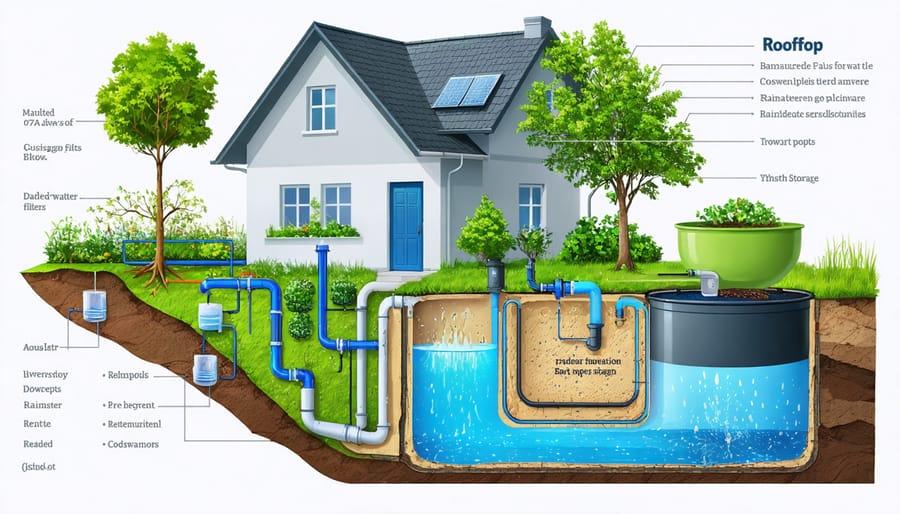
The Rainwater Harvesting System Market focuses on technologies and infrastructure designed to collect, store, treat, and reuse rainwater for various applications, including domestic use, irrigation, industrial processes, groundwater recharge, and stormwater management. Rainwater harvesting systems typically include catchment surfaces, conveyance networks, filtration units, storage tanks, and distribution mechanisms. As water scarcity intensifies due to population growth, urbanization, climate variability, and overexploitation of freshwater resources, rainwater harvesting has emerged as a practical and sustainable solution to supplement conventional water supplies. Governments, industries, and households are increasingly adopting these systems to enhance water security, reduce dependency on municipal sources, and improve resilience against droughts and supply disruptions.
Market Drivers
One of the primary drivers of the Rainwater Harvesting System Market is growing global water scarcity. Many regions face declining groundwater levels, unpredictable rainfall patterns, and increasing competition for freshwater resources. Rainwater harvesting provides an alternative and decentralized water source that can reduce pressure on public water systems and natural water bodies. This makes it particularly attractive in water-stressed urban and semi-arid regions.
Rapid urbanization and infrastructure development also support market growth. Expanding cities require reliable water management solutions to meet residential, commercial, and industrial demand. Rainwater harvesting systems are increasingly integrated into residential buildings, commercial complexes, educational institutions, and industrial facilities to reduce water consumption and manage stormwater runoff more effectively.
Government policies and regulatory support further drive adoption. Many governments promote rainwater harvesting through building codes, incentives, subsidies, and mandatory installation requirements in new developments. These policies encourage both large-scale and small-scale adoption, accelerating market growth across residential and non-residential segments.
Rising awareness of environmental sustainability is another key driver. Rainwater harvesting aligns with sustainability goals by conserving water, reducing energy use associated with water treatment and pumping, and mitigating urban flooding. As environmental consciousness grows among consumers and organizations, demand for water-efficient solutions continues to increase.
Market Challenges
Despite its benefits, the Rainwater Harvesting System Market faces several challenges. High initial installation costs can deter adoption, particularly for advanced systems that include large storage tanks, filtration units, and automated controls. While long-term savings are significant, upfront investment remains a barrier for some households and small businesses.
Maintenance and water quality concerns also pose challenges. Rainwater harvesting systems require regular cleaning, inspection, and maintenance to ensure water quality and system performance. Inadequate maintenance can lead to contamination, reduced efficiency, and user dissatisfaction, affecting adoption rates.
Limited awareness and technical knowledge in some regions further constrain market growth. In areas where water scarcity is not yet severe or public awareness is low, rainwater harvesting may be perceived as unnecessary or complex. Lack of skilled installers and standardized designs can also hinder effective implementation.
Market Opportunities
Technological advancement presents significant opportunities in the Rainwater Harvesting System Market. Innovations in filtration, disinfection, storage materials, and automation are improving system efficiency, reliability, and ease of use. Smart rainwater harvesting systems equipped with sensors and monitoring platforms enable real-time water level tracking, quality monitoring, and optimized usage, enhancing user confidence and system performance.
Integration with green building and sustainable infrastructure initiatives offers strong growth potential. Rainwater harvesting is increasingly incorporated into green building certifications and sustainable urban planning projects. Developers and architects are adopting integrated water management solutions that combine rainwater harvesting, greywater recycling, and stormwater control to improve overall water efficiency.
Agricultural and industrial applications also provide opportunities. In agriculture, rainwater harvesting supports irrigation in rain-fed and water-scarce areas, improving crop resilience and productivity. In industrial and commercial settings, harvested rainwater can be used for cooling, cleaning, landscaping, and process applications, reducing operational water costs and environmental impact.
Regional Insights
Asia-Pacific is one of the fastest-growing regions in the Rainwater Harvesting System Market, driven by high population density, water scarcity, and strong government initiatives promoting water conservation. Urban expansion and agricultural dependence on monsoon rainfall further support adoption across residential, commercial, and rural applications.
Europe represents a mature and sustainability-focused market. Strict environmental regulations, green building standards, and water conservation policies support widespread adoption of rainwater harvesting systems in residential and commercial buildings. The region emphasizes efficient system design, quality standards, and integration with urban water management strategies.
North America shows steady growth, driven by increasing water stress in certain regions, rising awareness of sustainable practices, and adoption in commercial and institutional buildings. Demand is also supported by initiatives focused on stormwater management and reduction of municipal water demand.
Other regions, including the Middle East, Africa, and Latin America, are gradually adopting rainwater harvesting systems to address water scarcity, support agriculture, and improve resilience in arid and semi-arid environments.
Future Outlook
The Rainwater Harvesting System Market is expected to grow steadily as water scarcity challenges intensify and sustainability becomes a central priority in infrastructure development. Adoption will increase across residential, commercial, industrial, and agricultural sectors as systems become more affordable, efficient, and user-friendly.
Future developments will focus on smart and integrated water management solutions. Rainwater harvesting systems will increasingly be combined with digital monitoring, automated controls, and hybrid water reuse technologies to maximize efficiency and reliability.
Climate change adaptation will further shape market growth. As rainfall patterns become more unpredictable, decentralized water storage and reuse solutions will be critical for building resilient communities and reducing vulnerability to droughts and water supply disruptions.
Conclusion
The Rainwater Harvesting System Market plays a vital role in addressing global water scarcity and promoting sustainable water management. Driven by urbanization, environmental awareness, government support, and technological innovation, the market offers strong long-term growth potential. While challenges related to cost, maintenance, and awareness remain, advancements in system design and integration with sustainable infrastructure are strengthening adoption. As water security becomes increasingly critical, rainwater harvesting systems will continue to be an essential component of resilient and environmentally responsible water management strategies.

 English
 French
 Spanish
 Portuguese
 Deutsch
 Turkish
 Dutch
Dutch
 Italiano
 Russian
 Romaian
 Portuguese (Brazil)
 Greek
Greek
